Hamilton & Chase Tours
Ancient Japan — Private Package 11-day Japan tour: Tokyo, Kanazawa, four days in Kyoto, Hiroshima’s Peace Memorial, Miyajima, and Osaka.

11-Day Private Package Journey

Ancient Japan

Tokyo, Kanazawa, four days in Kyoto, Hiroshima’s Peace Memorial, Miyajima, and Osaka.

Available as Private Semi-Private Self-Guided
From €5,290 per person 11 days / 10 nights
View Itinerary

Tour Overview

11 days across Japan.

Japan's cultural depth requires time. The country's Buddhist and Shinto traditions arrived in the 6th and 7th centuries and were then layered over by the imperial court, the samurai culture, the tea ceremony, the woodblock print, the Edo merchant class, the Meiji modernisation, and then the 20th century's catastrophes and its recovery — all without losing the thread of the oldest traditions, which are still practiced in the same temples and shrines where they began. This eleven-day private journey takes Japan's cultural heritage seriously: Nikko's mountain mausoleum, Kanazawa's intact Edo-period city, Kyoto's 1,600 temples, Hiroshima's transformation from destruction to memorial, Miyajima's island shrine, and the deer park at Nara where the distinction between the sacred and the everyday has been maintained for 1,300 years.

Detailed Itinerary

Your journey, day by day.

Every day is designed with breathing room. Sleep in, take a detour, linger at lunch — the itinerary flexes around you, not the other way around.

Day 1 — Arrival in Tokyo
Day 1
1

Day 1

Arrival in Tokyo

The city of 37 million where every service is extraordinary.

Your private driver meets you at Narita or Haneda. The afternoon at leisure in Tokyo — the first neighbourhood walk, the first convenience store, the first experience of Japanese precision in everyday life. Welcome dinner at a restaurant selected for your specific preferences: the ten-seat counter omakase where the chef decides each course, the yakitori alley where skewers are cooked over charcoal and eaten with cold Sapporo beer, or the teppanyaki counter where the Wagyu beef is brought to the griddle in front of you and the chef explains the marbling grade.

  • Private airport transfer
  • First Tokyo evening
  • Welcome dinner — Tokyo's extraordinary range
4–5★ hotel, Tokyo
Day 2 — Tokyo: Depth and Contradiction
Day 2
2

Day 2

Tokyo: Depth and Contradiction

The ancient temple district, the digital art, and the neighbourhood that survived.

Your private Tokyo guide begins in Asakusa: the Senso-ji temple complex, the Nakamise shopping street, and the Sumida River. North to Yanaka — the old Tokyo neighbourhood that survived the 1923 earthquake and the 1945 firebombing and preserves the low wooden street-level, the small temples, and the neighbourhood pace of a pre-war city. The Tokyo National Museum in Ueno: the finest collection of Japanese art in existence, with the Horyuji Treasures gallery holding objects from the 7th-century temple at Nara. The afternoon: the Nezu Shrine torii tunnel and Harajuku, where Takeshita Street's creative extremity and the Meiji Shrine's forest calm exist within 400 metres of each other. teamLab Borderless for the early evening.

  • Senso-ji and Yanaka — the ancient and the surviving
  • Tokyo National Museum — the finest Japanese art collection
  • Nezu Shrine torii tunnel
  • teamLab Borderless digital art
Meals: Breakfast 4–5★ hotel, Tokyo
Day 3 — Nikko: The Shogun's Legacy
Day 3
3

Day 3

Nikko: The Shogun's Legacy

The most ornate religious complex in Japan.

Nikko is two hours north of Tokyo in the mountains of Tochigi prefecture. The Tosho-gu shrine complex — the mausoleum of Tokugawa Ieyasu, built 1634–1636 — is the most elaborately decorated religious site in Japan: the Yomeimon gate with its 508 carved animals, the three wise monkeys above the Sacred Stable, the sleeping cats above the inner gateway, and the 13,000 cedar trees planted on the approach by a feudal lord who gave what he could in lieu of gold. Your private guide explains the political theology of the complex and the relationship between the Tokugawa shogunate's religious claims and its political power. The Rinno-ji temple, the Futarasan Shrine, and the walk through the cedar avenue. Return to the ryokan at the mountain lake in the afternoon.

  • Tosho-gu shrine — 508 carved animals on the Yomeimon gate
  • Three wise monkeys — the original Japanese carving
  • Cedar avenue planted by a lord who gave trees instead of gold
  • Chuzenji Lake ryokan overnight
Meals: Breakfast Traditional ryokan, Nikko / Chuzenji
Day 4 — Kanazawa: The Unbombed City
Day 4
4

Day 4

Kanazawa: The Unbombed City

The most complete Edo-period city in Japan.

Kanazawa was Japan's second-largest city in the Edo period and the only major Japanese city not bombed in the 20th century — the result is the most complete collection of Edo-period urban fabric in existence. The drive or express train from Nikko to Kanazawa takes the mountain roads through the Nagano basin. Your afternoon in Kanazawa: Kenroku-en garden, one of the three great gardens of Japan, whose 300-year accumulation of trees, ponds, and stone lanterns represents the highest expression of the Japanese strolling garden tradition. The Higashi Chaya geisha district, three blocks of intact 19th-century machiya townhouses. The Omicho market with its extraordinary Japan Sea seafood. Dinner at a Kanazawa restaurant whose menu is the gold standard of the Japan Sea coast: snow crab, fatty yellowtail buri, and the cured Kanazawa kaga cuisine.

  • Kenroku-en — one of the three great gardens of Japan
  • Higashi Chaya geisha district — intact Edo-period townhouses
  • Omicho market — Japan Sea seafood at its finest
  • Kanazawa kaga dinner — snow crab and buri
Meals: Breakfast 4–5★ hotel, Kanazawa
Day 5 — Kyoto: The Imperial Capital
Day 5
5

Day 5

Kyoto: The Imperial Capital

One thousand years of Japanese civilisation, intact.

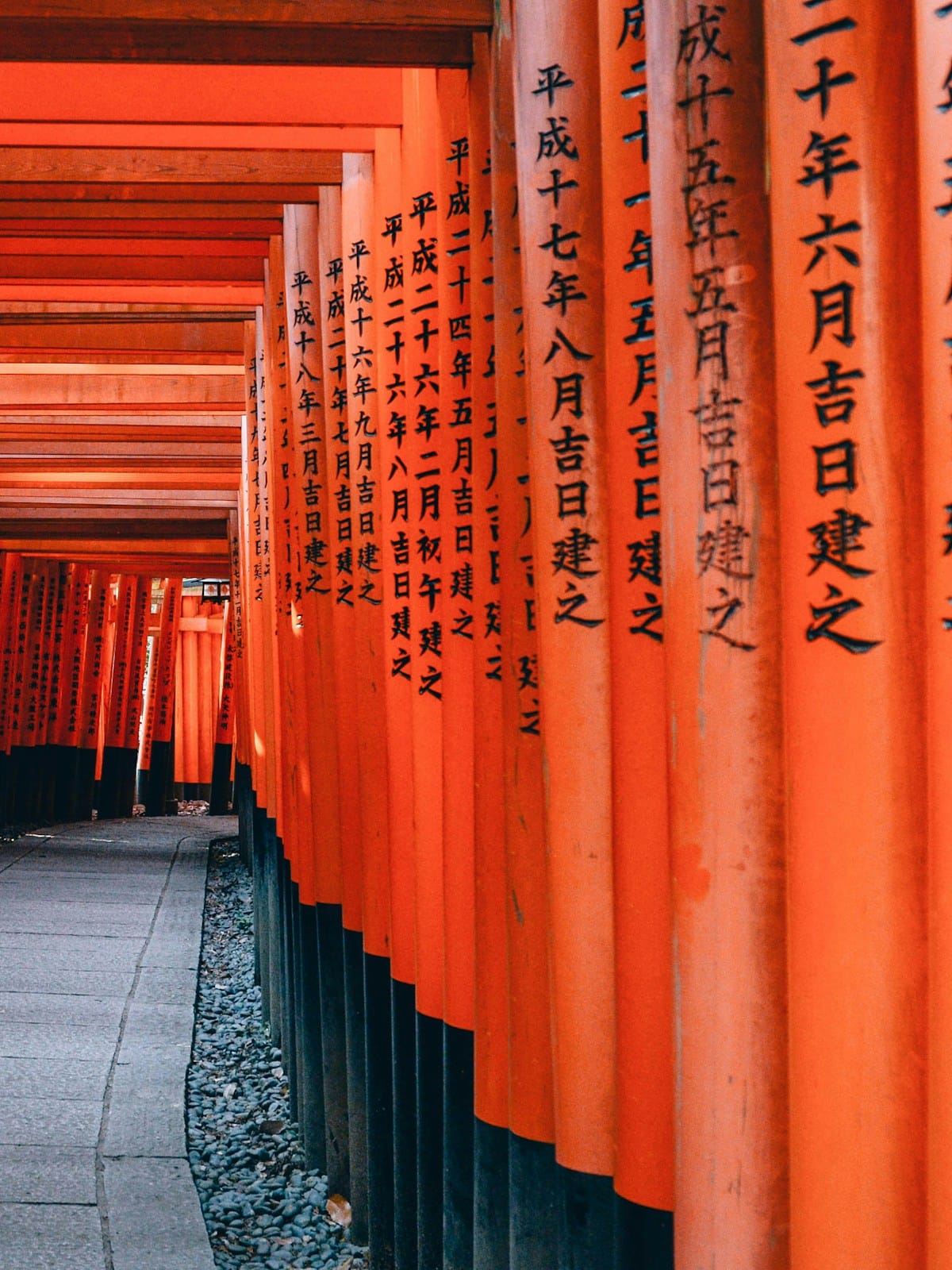
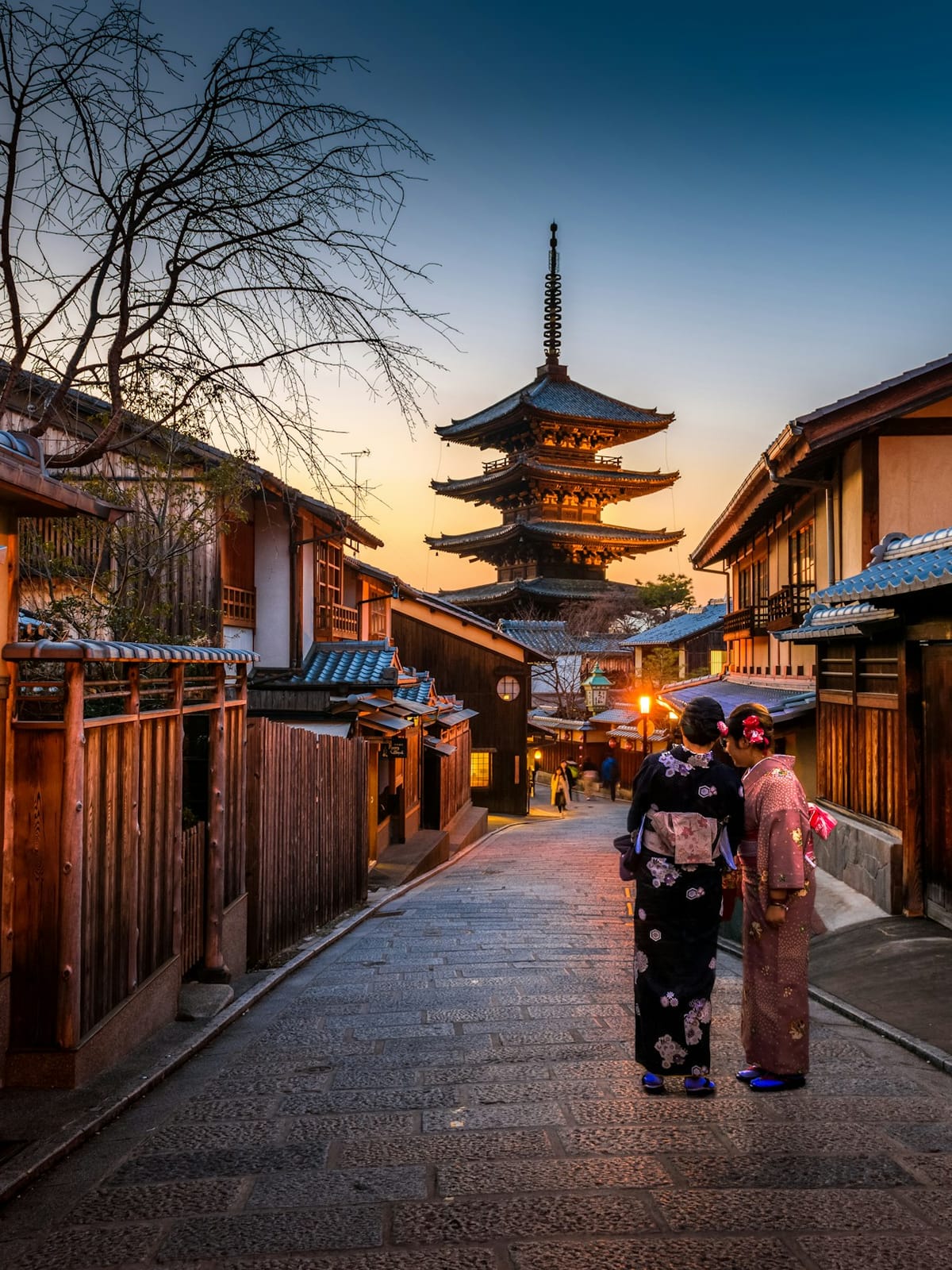
Express train or Shinkansen from Kanazawa to Kyoto takes ninety minutes. Kyoto — the imperial capital from 794 to 1869, deliberately spared in 1945 — contains 1,600 Buddhist temples and 400 Shinto shrines, the intact geisha districts, and the craft traditions (lacquer, ceramics, Nishijin textiles, metalwork) that the imperial court required for a millennium. Your Kyoto private specialist guide meets you at the hotel for the afternoon: Fushimi Inari Taisha and the ten thousand torii gates ascending the mountain. The lower gates in the afternoon light; the upper mountain paths when the day visitors have returned to the city. Gion in the evening — the machiya townhouse district where geiko still walk to their engagements.

  • Shinkansen to Kyoto
  • Fushimi Inari — the torii gate mountain
  • Gion evening — the geiko district
  • Kyoto private specialist guide
Meals: Breakfast 4–5★ hotel, Kyoto
Day 6 — Kyoto: The Great Temples
Day 6
6

Day 6

Kyoto: The Great Temples

The cliff temple, the golden temple, and the silver temple.

Kiyomizu-dera — the wooden stage temple built into the Higashiyama cliff face on 139 wooden pillars without a single nail, founded in 778 and rebuilt in its current form in 1633 — for the morning. The stone-flagged lanes of Ninen-zaka and Sannen-zaka below, where the Meiji-era merchant street preserves its shopfront architecture. Kinkaku-ji — the Golden Pavilion, whose top two floors are covered in gold leaf and reflected in the Kyokochi pond — for the midday visit (arrive early). Ginkaku-ji — the Silver Pavilion, whose 15th-century garden of raked white sand (the Sea of Silver Sand) and the cone of the Moon Viewing Platform are the purest expression of the wabi-sabi aesthetic in Japanese landscape architecture. The Philosopher's Path canal walk connecting the two.

  • Kiyomizu-dera — wooden cliff temple, no nails
  • Ninen-zaka and Sannen-zaka merchant lanes
  • Kinkaku-ji — the Golden Pavilion reflection
  • Ginkaku-ji and the Sea of Silver Sand
Meals: Breakfast 4–5★ hotel, Kyoto
Day 7 — Kyoto: Arashiyama and the Zen Mind
Day 7
7

Day 7

Kyoto: Arashiyama and the Zen Mind

The bamboo grove, the Zen garden, and the mountain river.

Arashiyama in the morning: the bamboo grove before nine, the Tenryu-ji temple garden — the finest Zen garden in Japan, designed in 1339 by Muso Soseki and still maintained to its original composition. The Oi River cormorant fishing boats moored at the bamboo grove landing. North to Daitoku-ji — the complex of sub-temples in the northwest of the city that is the most complete collection of Zen temple gardens in Japan and receives a fraction of Kinkaku-ji's visitors. The Daisen-in sub-temple garden and the Ryogen-in's five distinct garden compositions around a single building. Nishiki Market for the afternoon food walk. The Pontochō dining alley in the evening — the narrow pedestrian street along the Kamogawa River where Kyoto's best restaurants have their back terraces above the water.

  • Arashiyama bamboo grove early morning
  • Tenryu-ji Zen garden — the finest in Japan
  • Daitoku-ji sub-temples — Zen gardens without the crowds
  • Pontochō evening — Kyoto's river dining
Meals: Breakfast 4–5★ hotel, Kyoto
Day 8 — Nara: The First Capital
Day 8
8

Day 8

Nara: The First Capital

The sacred deer, the colossal Buddha, and the oldest Buddhist temple precinct.

Nara was Japan's first permanent capital in 710 AD and its Buddhist monuments are the oldest in Japan. Todai-ji — the Great Buddha Hall, the largest wooden structure in the world — houses the bronze Vairocana Buddha cast in 743 AD. Kasuga Taisha shrine in the cedar forest with its 3,000 stone and bronze lanterns. Horyu-ji — thirty minutes west of Nara city — is the oldest Buddhist temple in Japan (completed 607 AD) and contains some of the oldest wooden structures in the world, including a five-storey pagoda whose central pillar has been standing since the 7th century. The 1,200 deer in Nara Park, considered divine since the 8th century, bow when offered crackers and eat from your hand with supernatural calm. Return to Kyoto for the final evening.

  • Todai-ji Great Buddha Hall — largest wooden structure on earth
  • Horyu-ji — Japan's oldest temple and the oldest wooden buildings in the world
  • Kasuga Taisha — 3,000 lanterns in the forest
  • Nara's sacred deer
Meals: Breakfast 4–5★ hotel, Kyoto
Day 9 — Hiroshima: The City That Rebuilt Itself
Day 9
9

Day 9

Hiroshima: The City That Rebuilt Itself

The Peace Memorial, the atomic bomb dome, and the transformation since 1945.

The Shinkansen from Kyoto to Hiroshima takes forty-five minutes. The Hiroshima Peace Memorial Museum and the Atomic Bomb Dome — the only building left standing near the hypocenter, preserved in its damaged state as the permanent reminder — are among the most important historical sites in the world. Your private guide has been working the Hiroshima memorial sites for fifteen years and approaches the visit with the care it requires: the history of the decision to use the bomb on August 6, 1945; the immediate and long-term effects; the extraordinary story of Hiroshima's recovery and its transformation into a city of international peace advocacy. The museum's post-2019 renovation made it one of the finest historical institutions in Japan. The Peace Park, the Children's Peace Monument and the thousand paper cranes of Sadako Sasaki, the Memorial Cenotaph. The Hiroshima oysters for lunch — the city is also Japan's largest oyster producer, and the fish markets are worth the visit. Overnight in Hiroshima.

  • Atomic Bomb Dome — preserved at the hypocenter
  • Hiroshima Peace Memorial Museum
  • Private guide with fifteen years on this site
  • Hiroshima oysters — Japan's largest producer
Meals: Breakfast 4–5★ hotel, Hiroshima
Day 10 — Miyajima: The Floating Shrine
Day 10
10

Day 10

Miyajima: The Floating Shrine

The torii gate that rises from the sea.

Miyajima — the Island of Gods — is twenty minutes from Hiroshima by ferry and has been a sacred Shinto site since the 6th century. The Itsukushima Shrine was built on piers over the tidal flat in the 12th century, and its Grand Torii gate rises from the sea at high tide in one of the most recognisable images in Japan. At low tide you can walk out to the gate on the tidal flat and look back at the shrine floating above the water. The island's wild deer (related to Nara's sacred deer) roam the streets of the small town and the temple approaches. Mt Misen — the sacred mountain above the shrine — is accessible by ropeway or on foot (90-minute hike) for the view of the Inland Sea. Return to Hiroshima or direct to Osaka by Shinkansen.

  • Miyajima — island sacred since the 6th century
  • Itsukushima Shrine floating at high tide
  • Grand Torii gate in the sea
  • Mt Misen ropeway and the Inland Sea view
Meals: Breakfast 4–5★ hotel, Osaka
Day 11 — Departure from Osaka
Day 11
11

Day 11

Departure from Osaka

The food city and the final morning.

The morning in Osaka: the Dotonbori canal food street, the Kuromon Ichiba market, and a final Japanese breakfast before the airport. Osaka's Kansai International Airport is thirty minutes from the city. Your private driver transfers you to the airport at the agreed time.

  • Dotonbori final morning
  • Kuromon market
  • Private transfer to Kansai Airport
Meals: Breakfast

Where You'll Stay

Hand-picked hotels, every night.

We choose properties for character, location, and the kind of service that makes you feel looked after — not just checked in. Every hotel can be swapped for an alternative if you prefer.

4–5★ hotel, Tokyo

Tokyo

2 nights

4–5★ hotel

City centre

Two Tokyo nights — city orientation before the cultural journey south

Traditional ryokan, Nikko / Chuzenji

Nikko / Chuzenji

1 night

Traditional ryokan

Chuzenji Lake

Mountain ryokan at the lake above Nikko

4–5★ hotel, Kanazawa

Kanazawa

1 night

4–5★ hotel

City centre

Near Kenroku-en and the Higashi Chaya district

4–5★ hotel, Kyoto

Kyoto

4 nights

4–5★ hotel

City centre or Higashiyama

Four nights in Kyoto — the extended time that the city's depth requires

4–5★ hotel, Hiroshima

Hiroshima

1 night

4–5★ hotel

City centre

Overnight in Hiroshima for the full morning at the Peace Memorial and the Miyajima day

4–5★ hotel, Osaka

Osaka

1 night

4–5★ hotel

City centre

Final night before departure from Kansai Airport

Hotels shown are indicative of the standard we book. Upon request, we will provide a detailed itinerary with specific hotel options tailored to your preferences and budget.

What's in the Price

Included

  • 10 nights in 4–5★ hotels and one traditional ryokan
  • Daily breakfast at your hotel or ryokan
  • Private airport transfer in Tokyo
  • All private vehicle transfers
  • Shinkansen tickets (Kanazawa–Kyoto, Kyoto–Hiroshima, Hiroshima–Osaka)
  • Tokyo private guide
  • Kyoto private specialist guide (two days)
  • Hiroshima Peace Memorial specialist guide
  • Kanazawa guided tour
  • Nikko Tosho-gu private guide
  • Miyajima visit and ropeway tickets
  • Horyuji temple entry
  • Todai-ji entry
  • teamLab Borderless admission
  • Tokyo National Museum entry
  • Kenroku-en garden entry
  • All entrance fees for guided visits
  • 24/7 travel specialist support
  • Hamilton & Chase digital travel booklet

Not Included

  • International flights to/from Japan
  • Travel insurance (required — we can arrange on request)
  • Meals not listed
  • Personal expenses
  • Gratuities for guides and drivers
  • Accommodation tax (collected by hotels)

Good to Know

  • The Hiroshima Peace Memorial Museum visit requires emotional preparation — the post-2019 renovation presents the human cost of the bombing in detail. Your guide will brief you on what to expect. The visit is approximately two hours.
  • Four nights in Kyoto is the right allocation for this itinerary — guests who have tried to see Kyoto in two nights consistently report wishing they had more time.
  • The Japan Rail Pass covers all Shinkansen travel on this itinerary. Your specialist will advise on whether a pass or individual tickets is more economical for your group size and routing.
  • Kanazawa is best reached from Tokyo by Shinkansen (2.5 hours) or from Nagano by limited express — your specialist will route the Nikko–Kanazawa transfer based on your preferences.

Make It Yours

Optional add-ons & upgrades.

Every trip is different. These extras can be woven into your itinerary — just let your travel specialist know what catches your eye.

Himeji Castle

Japan's finest surviving original castle — the White Heron Castle, UNESCO-listed, thirty minutes from Osaka by Shinkansen. The largest and most complete original castle in Japan.

From €65 pp

Sake brewery, Fushimi

Kyoto's Fushimi district is Japan's second-greatest sake region — a private morning at a producing brewery with tasting of fresh, seasonal, and aged sake

From €75 pp

Kodo incense ceremony, Kyoto

The Japanese art of listening to incense — a private session with a practitioner in Kyoto, as refined and little-known as the tea ceremony

From €85 pp

Itsukushima night stay

An overnight on Miyajima island allows the late evening and early morning visits to the shrine and the torii gate — when the day visitors have left and the island recovers its sacred character

From €195 pp

"Hiroshima was the most important day of the journey. Our guide had worked the Peace Memorial for fifteen years and explained the history without sentimentality — which made it more powerful, not less. The morning after, on Miyajima, the torii gate at high tide and the silence of the island before the ferries started. Eleven days felt exactly right. Hamilton & Chase designed a journey through Japanese culture rather than a checklist of sites."

Nicholas & Clare F.

Copenhagen, Denmark · Ancient Japan, October 2024

Common Questions

Questions about this trip.

Why is Kanazawa on this itinerary rather than a direct Tokyo–Kyoto journey?

Because Kanazawa is the most complete expression of Edo-period Japan — the geisha districts, the market, the garden, the crafts — without the international tourism infrastructure of Kyoto. Guests who have been to Kyoto before consistently identify Kanazawa as the discovery that changed how they understood Japan. For first-time visitors, it establishes an Edo-period baseline before the Kyoto temple circuit.

Is the Hiroshima visit appropriate for children?

For teenagers and older, yes — the Peace Memorial Museum presents history in a way that is direct but not exploitative, and the visit has been part of Japanese school curricula for decades. For younger children, your guide can adjust the visit to focus on the Peace Park and the physical landscape rather than the museum interior.

Private Package Journey

Ancient Japan

11 days / 10 nights

From €5,290

per person

Ready to go?

Share a few details and a specialist will reply within one business day.

More Japan Tours

Prefer to Talk?

Available Mon–Fri 9am–6pm CET.
On-trip support is 24/7.

Plan My Trip