Hamilton & Chase Tours
Best of Croatia — Private Package 9-day Croatia tour: Zagreb, Plitvice’s turquoise waterfalls, Split, Hvar, and Dubrovnik — the complete picture.

9-Day Private Package Journey

Best of Croatia

Zagreb, Plitvice’s turquoise waterfalls, Split, Hvar, and Dubrovnik — the complete picture.

Available as Private Semi-Private Self-Guided
From €3,490 per person 9 days / 8 nights
View Itinerary

Tour Overview

9 days across Croatia.

Croatia is three countries compressed into one: a Central European capital with Baroque coffeehouses and a Habsburg tramway, a continental interior of Karst rivers and thundering waterfalls, and a Adriatic coast of medieval walled cities and island archipelagos. Most visitors choose one or the other. This nine-day private journey takes all three in the sequence that makes the most geographical and narrative sense — south from Zagreb through the limestone interior to the Dalmatian coast, arriving in Dubrovnik as the natural conclusion. Plitvice Lakes is the hinge between the two halves: a UNESCO World Heritage landscape of sixteen interconnected lakes and ninety-two waterfalls where the water is a shade of turquoise that photographs badly because it looks too artificial. It is not. The journey is designed for first-time visitors to Croatia who want the complete picture.

Detailed Itinerary

Your journey, day by day.

Every day is designed with breathing room. Sleep in, take a detour, linger at lunch — the itinerary flexes around you, not the other way around.

Day 1 — Zagreb: Central European Croatia
Day 1
1

Day 1

Zagreb: Central European Croatia

The capital that looks east and west simultaneously.

Zagreb is the surprise of Croatia — a city that has nothing to do with the Adriatic coast and everything to do with Central Europe. The Upper Town (Gornji Grad) of the Austro-Hungarian period sits above the Lower Town's grid of Secessionist buildings and coffeehouses on a limestone ridge, connected by the world's shortest funicular (thirty metres, built 1890). Your private driver meets you at Zagreb Airport. The afternoon at leisure: the Cathedral of the Assumption of the Blessed Virgin Mary with its neo-Gothic spires restored after the 1880 earthquake, the Dolac open-air market that has been operating on the same square since 1930, the streets of Tkalčićeva where the outdoor cafes have been the social infrastructure of Zagreb since the 19th century. Dinner at a restaurant that takes the Croatian-Central European combination seriously: the black risotto and the štrukli cheese pastry from the same kitchen.

  • Private airport transfer
  • Zagreb Upper Town and the Austro-Hungarian grid
  • Dolac market and Tkalčićeva café culture
  • Croatian-Central European dinner
4–5★ hotel, Zagreb centre
Day 2 — Zagreb: Museums and the City Below
Day 2
2

Day 2

Zagreb: Museums and the City Below

The most interesting small-museum city in Europe.

Zagreb has more museums per capita than almost any European city of comparable size, and several of them are genuinely unusual. The Museum of Broken Relationships — whose collection consists of objects donated by individuals after the end of a love affair, each with a handwritten description of its significance — has been exhibited in forty countries and the Zagreb permanent collection is the original. The Mimara Museum holds one of the great private art collections in Central Europe: Raphael, Velázquez, Rubens, and a Renaissance sculpture collection that rivals larger institutions. The Archaeological Museum's numismatic collection is the largest in Southeast Europe. Your private guide — a Zagreb art historian — chooses the combination that fits your interests. The afternoon is for the Lower Town: the Art Nouveau buildings along Ilica, the Green Horseshoe of connected parks that Lenuci designed in the 1880s as Zagreb's equivalent of the Ringstrasse. Departure south in the late afternoon for Plitvice.

  • Museum of Broken Relationships — the original, permanent collection
  • Mimara Museum private visit with art historian
  • Zagreb Lower Town and the Green Horseshoe
  • Private transfer south to Plitvice
Meals: Breakfast Hotel near Plitvice Lakes
Day 3 — Plitvice Lakes
Day 3
3

Day 3

Plitvice Lakes

Sixteen lakes and ninety-two waterfalls in UNESCO turquoise.

Plitvice Lakes National Park is one of the oldest national parks in Southeast Europe, designated in 1949 and UNESCO World Heritage listed in 1979. The park consists of sixteen terraced lakes connected by waterfalls, boardwalks, and footpaths through beech and fir forest, in a Karst landscape where the limestone dissolved by the water is continuously redeposited as travertine barriers — the mechanism that created the waterfalls and is still building them. The colour of the water — cobalt blue in deep sections, emerald green in the shallows, transparent white in the falls — is the result of minerals, algae, and light, and it changes across the day and the season. Your private guide takes you through the park in the morning before the tour groups arrive. The upper and lower lakes circuit by boardwalk and boat, with the Veliki Slap waterfall at seventy-eight metres — the tallest in Croatia — as the centrepiece. The afternoon at leisure in the park before the transfer west to the coast.

  • Plitvice Lakes UNESCO park — boardwalk and boat circuit
  • Veliki Slap — Croatia's tallest waterfall
  • Early morning before the tour groups arrive
  • Transfer to the Dalmatian coast
Meals: Breakfast 4★ hotel, Zadar old town
Day 4 — Zadar: The Overlooked City
Day 4
4

Day 4

Zadar: The Overlooked City

Where Alfred Hitchcock said the best sunset in the world happens.

Zadar is the oldest continuously inhabited city in Croatia and the most overlooked. Most visitors pass through on the way to Split, which means the extraordinary Roman forum at the centre of the old town — still the main public square, 2,000 years after it was built — receives far fewer people than it deserves. Your private guide meets you in the morning: the Forum and the Church of St Donatus, a pre-Romanesque rotunda built in the 9th century using stones from the Roman buildings that surrounded it; the Cathedral of St Anastasia, whose 12th-century bell tower Hitchcock climbed in 1964 and from whose platform he pronounced the sunset over the Zadar archipelago the best in the world. The Sea Organ — an architectural installation on the waterfront where the movement of the sea plays music through pipes beneath the stone steps — was installed in 2005 and has been the city's most discussed feature since. Afternoon at leisure in the old town and the waterfront.

  • Zadar Roman Forum — the main public square for 2,000 years
  • St Donatus rotunda — 9th-century church built from Roman stones
  • The Sea Organ — Hitchcock's favourite sunset location
  • Zadar archipelago from the waterfront
Meals: Breakfast 4★ hotel, Zadar old town
Day 5 — The Drive South: Šibenik and the River
Day 5
5

Day 5

The Drive South: Šibenik and the River

The only city in the Adriatic founded by Croats, and a waterfall that turns the sea green.

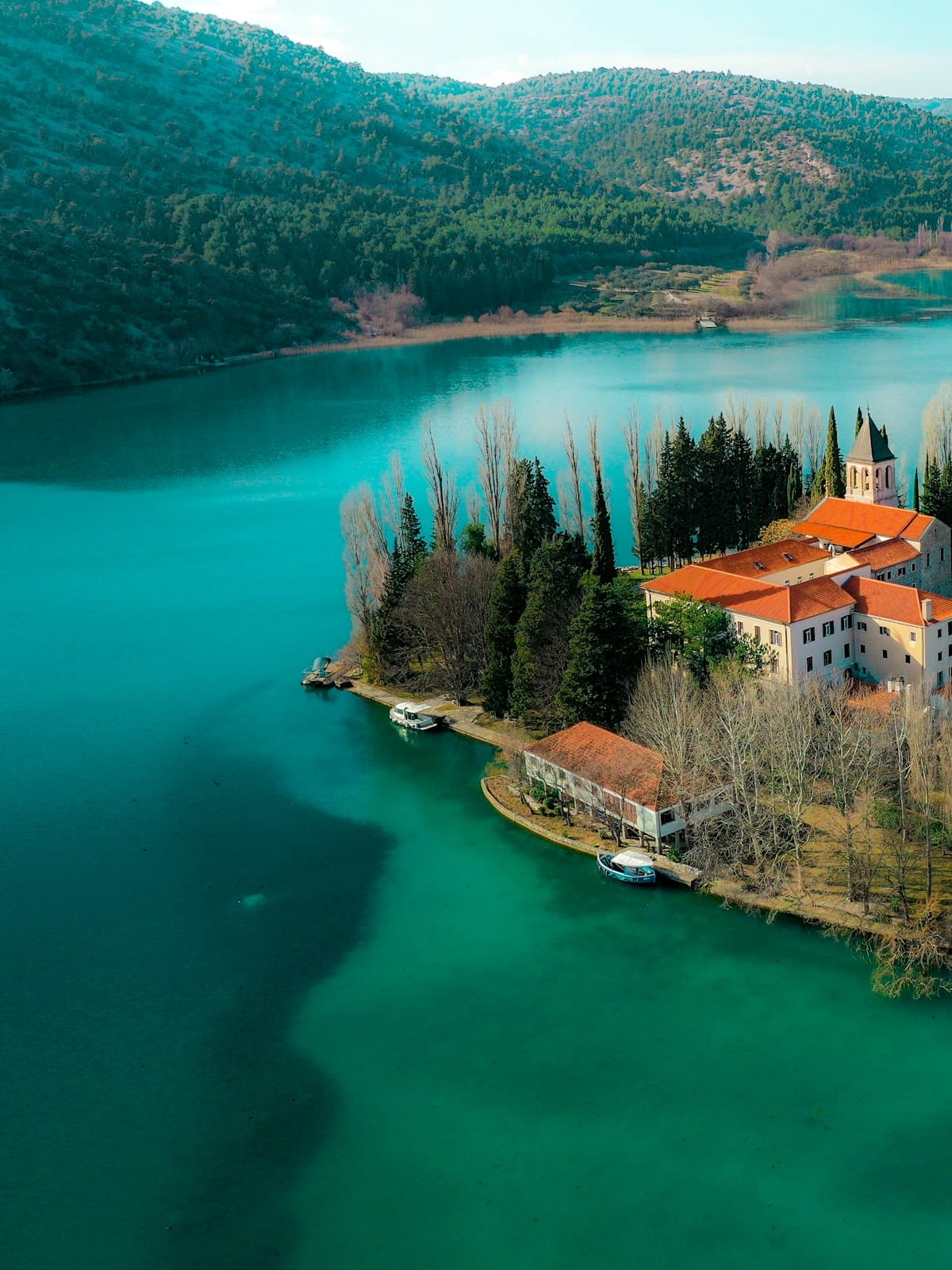
The coastal road from Zadar to Split passes through Šibenik — a medieval city that is, uniquely among Dalmatian towns, entirely Croatian in its founding and architecture, not Venetian or Roman. The Cathedral of St James is the first entirely stone-vaulted Gothic-Renaissance building in the world and was built without arches during construction — the master builders solved a structural problem that had not been solved before. UNESCO recognised it in 2000. The drive south also passes the mouth of the Krka River and the entrance to Krka National Park: the travertine waterfalls of Skradinski Buk, where the river descends over a series of seventeen interconnected falls before entering the sea. A boat trip upstream from Skradin to the falls, with swimming allowed at the base. Arrival in Split in the late afternoon. Dinner on the Riva.

  • Šibenik Cathedral of St James — the first fully stone-vaulted cathedral
  • Krka National Park — Skradinski Buk waterfall by boat
  • Swimming at the base of the Krka falls
  • Arrival in Split
Meals: Breakfast 4–5★ hotel, Split old town or Riva
Day 6 — Split: Diocletian's Legacy
Day 6
6

Day 6

Split: Diocletian's Legacy

The most extraordinary inhabited Roman monument in the world.

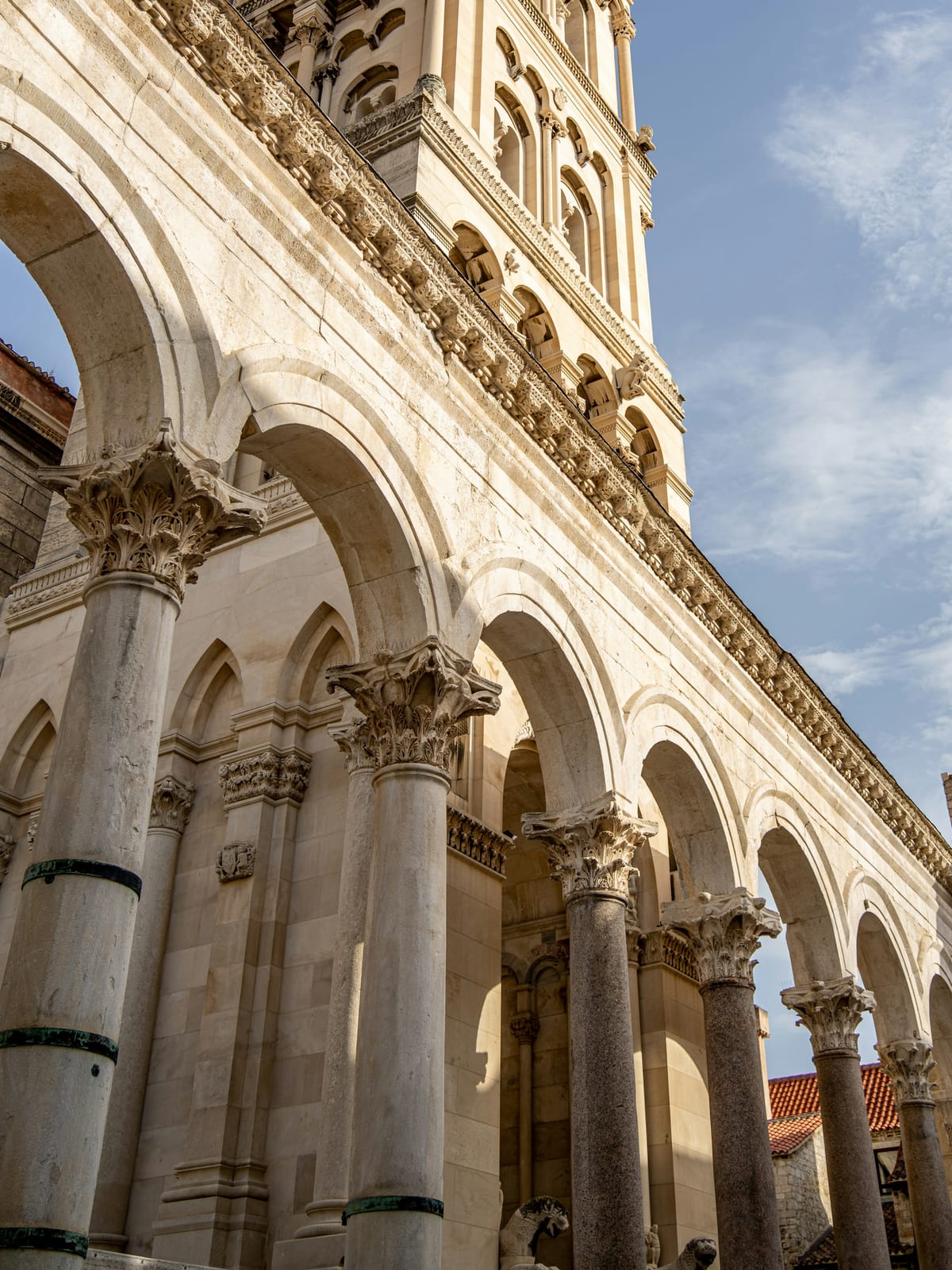
Split's distinction is not that it has a Roman palace near the city centre — it is that the Roman palace is the city centre, and has been continuously inhabited since 305 AD when Diocletian retired here. Your private guide — an archaeologist who has been working the Split site for fifteen years — takes you through the full story: the cardo and decumanus streets that still follow the Roman grid; the peristyle courtyard where daily life centres now as it did in the emperor's time; the basement halls beneath the peristyle, used as a medieval dump for centuries and now the best evidence of the original palace layout; and the extraordinary cathedral of St Domnius, installed in Diocletian's own mausoleum and therefore the best-preserved Roman imperial mausoleum in existence. The afternoon is yours: the Marjan Hill park above the city, the Meštrović Gallery in the sculptor's former summer residence, or simply the marble streets of the old town.

  • Diocletian's Palace with archaeologist guide — fifteen years on site
  • Palace basement halls and the peristyle courtyard
  • Cathedral of St Domnius in Diocletian's own mausoleum
  • Marjan Hill park panorama over Split and the islands
Meals: Breakfast 4–5★ hotel, Split
Day 7 — Hvar: The Sunniest Island
Day 7
7

Day 7

Hvar: The Sunniest Island

The lavender island and the oldest public theatre in southeastern Europe.

The private boat from Split reaches Hvar Town in an hour. Croatia's sunniest island (2,724 sunshine hours per year) has Venetian architecture at its centre — the loggia, clock tower, and arsenal that was converted to a theatre in 1612, making it the first public theatre in southeastern Europe, predating comparable institutions in Vienna and Budapest. Your morning in Hvar Town, then a drive through the lavender and rosemary interior to the Stari Grad Plain: the UNESCO-listed Greek agricultural landscape established in 384 BC, whose field boundaries remain unchanged after 2,400 years. A private boat takes you to the Pakleni Islands in the afternoon — the small archipelago of pine-forested islets off Hvar's harbour, with swimming in water that changes from green to deep blue as the depth increases. Fast catamaran to Dubrovnik in the late afternoon.

  • Private boat Split to Hvar
  • Hvar Venetian square and the 1612 theatre
  • Stari Grad Plain UNESCO landscape
  • Pakleni Islands private boat — afternoon swimming
Meals: Breakfast 5★ hotel, Dubrovnik
Day 8 — Dubrovnik: The City-State
Day 8
8

Day 8

Dubrovnik: The City-State

The medieval republic that survived for 450 years by being too valuable to destroy.

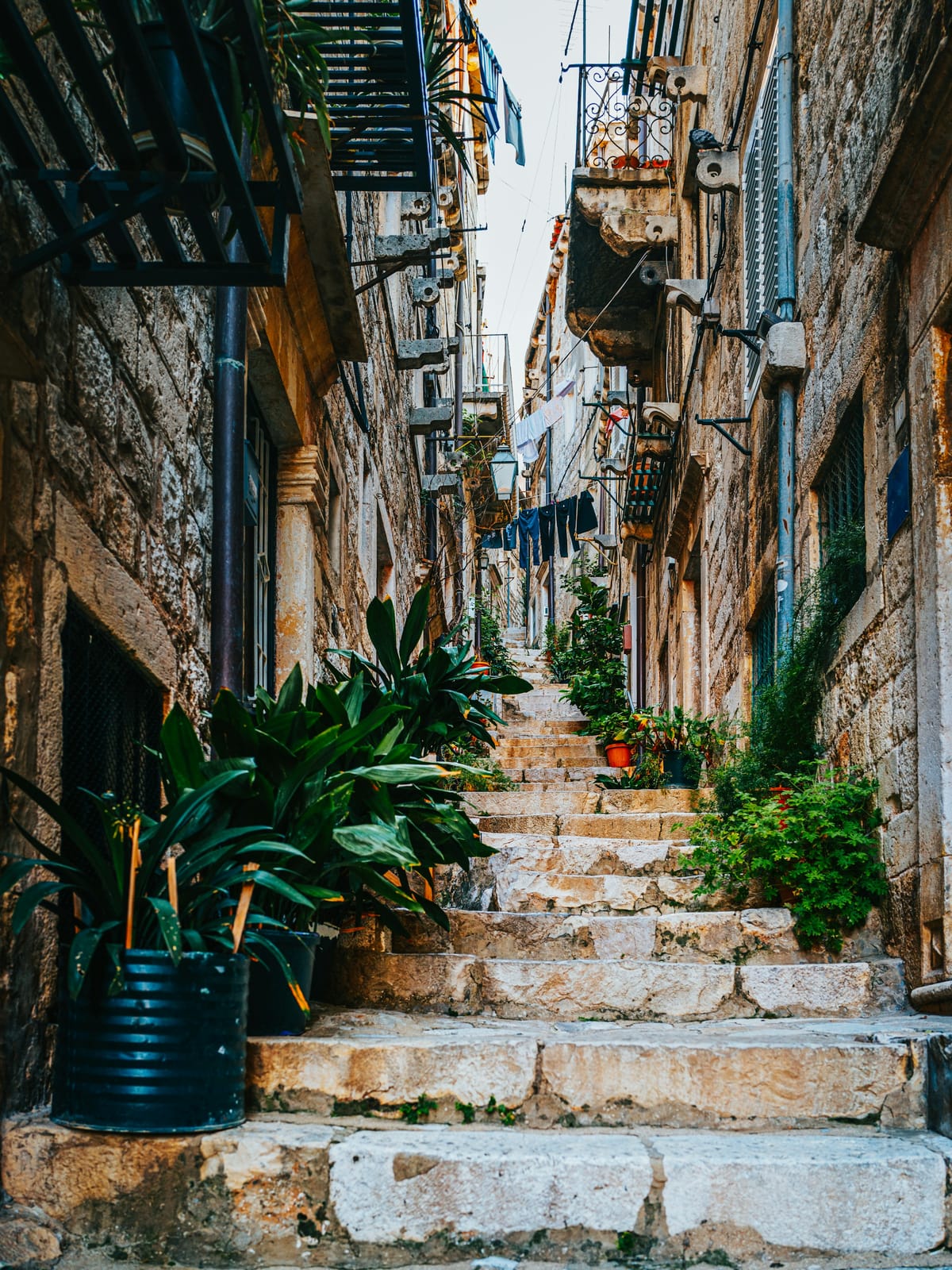
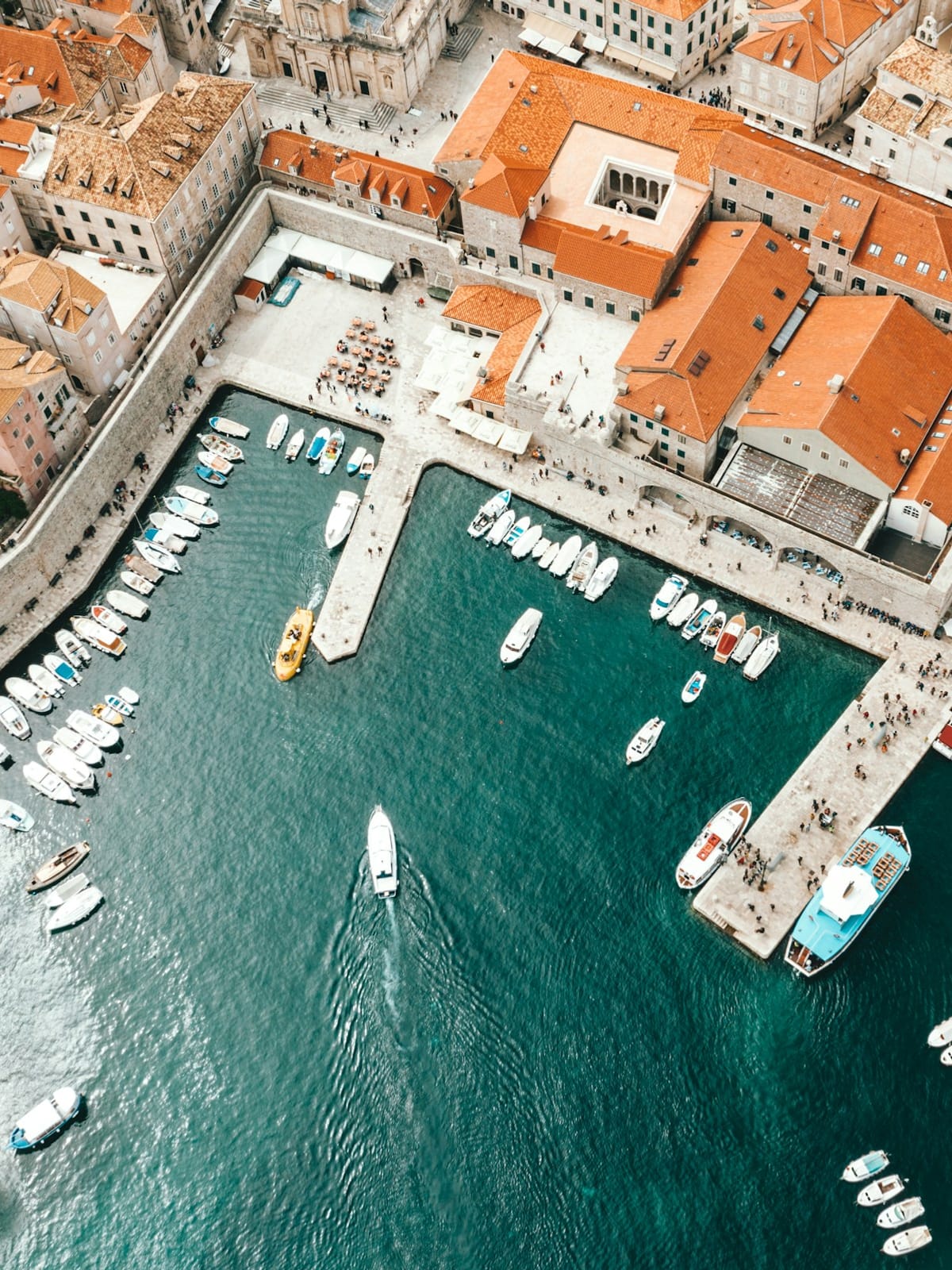
Dubrovnik's Old City is the best-preserved Gothic and Renaissance city in the Mediterranean. The Ragusan Republic maintained its independence for four and a half centuries not through military power but through diplomacy: playing Venice against the Ottoman Empire, paying tribute to the Sultan to ensure safe passage for its merchant ships, and investing its commercial profits into the finest architecture in the Adriatic. The result is a city where the walls, the Stradun, the Rector's Palace, the Dominican and Franciscan monasteries all survive from the 15th and 16th centuries with virtually no later intrusions. Your private guide meets you for the city walls circuit in the morning: two kilometres above the city on the mediaeval ramparts, looking down into the tiled roofs and out across the sea. Afternoon at leisure: the Dominican monastery pharmacy, the oldest in the region; the harbour and Fort Lovrijenac on the rocks outside the walls; the back streets where the city lives its daily life apart from the tourism.

  • Dubrovnik city walls circuit in the morning
  • Rector's Palace and Dominican monastery with private guide
  • The Stradun at its best hour
  • Fort Lovrijenac — the fortress outside the walls
Meals: Breakfast 5★ hotel, Dubrovnik
Day 9 — Departure
Day 9
9

Day 9

Departure

One last morning in the walled city.

The best hour in Dubrovnik is the first: before the cruise ships disgorge their passengers on the Pile Gate, the Stradun is empty limestone and quiet footsteps. Morning coffee at a bar on Gundulić Square, where the fruit and vegetable market is setting up. A final walk to the Buža bar — built into a gap in the city walls above the Adriatic, where the locals have been drinking wine and jumping into the sea since the 1970s. Your private driver transfers you to Dubrovnik Airport. The view of the old town walls from the sea road is the image Croatia leaves you with.

  • Dubrovnik at sunrise — before the crowds
  • Gundulić Square morning market and coffee
  • The Buža bar — wine above the sea
  • Private transfer to Dubrovnik Airport
Meals: Breakfast

Where You'll Stay

Hand-picked hotels, every night.

We choose properties for character, location, and the kind of service that makes you feel looked after — not just checked in. Every hotel can be swapped for an alternative if you prefer.

4–5★ hotel, Zagreb

Zagreb

1 night

4–5★ hotel

City centre (Lower Town)

Central location with easy walking to both Upper and Lower Town

Hotel, Plitvice area

Plitvice area

1 night

Hotel

Near national park entrance

Staying inside or adjacent to the park allows early morning entry before tour groups

4★ hotel, Zadar

Zadar

1 night

4★ hotel

Old town

Within walking distance of the Roman Forum and the waterfront

4–5★ hotel, Split

Split

2 nights

4–5★ hotel

Old town or Riva promenade

Inside or adjacent to the Diocletian's Palace walls

5★ hotel, Dubrovnik

Dubrovnik

2 nights

5★ hotel

Old town or Lapad peninsula

Old town hotels for atmosphere; Lapad for pool and sea access

Hotels shown are indicative of the standard we book. Upon request, we will provide a detailed itinerary with specific hotel options tailored to your preferences and budget.

What's in the Price

Included

  • 8 nights in 4–5★ hotels
  • Daily breakfast at each hotel
  • Private airport transfer in Zagreb
  • All private vehicle transfers between destinations
  • Private boat Split–Hvar and Pakleni Islands excursion
  • Fast catamaran Hvar–Dubrovnik
  • Zagreb private guide (art historian)
  • Plitvice Lakes private guide and national park entry
  • Split private archaeologist guide
  • Dubrovnik private guide and city walls circuit
  • Krka National Park boat and entry
  • Šibenik Cathedral of St James visit
  • Stari Grad Plain visit on Hvar
  • All entrance fees for guided visits
  • 24/7 travel specialist support
  • Hamilton & Chase digital travel booklet

Not Included

  • International flights to Zagreb / from Dubrovnik
  • Travel insurance (required — we can arrange on request)
  • Meals not listed
  • Personal expenses
  • Gratuities for guides and drivers
  • City tax (collected by hotels)

Good to Know

  • Plitvice Lakes is very crowded in July and August. The early morning entry (before park opening) that staying overnight near the park permits makes a significant difference — your specialist schedules this accordingly.
  • The drive from Zadar to Split via Krka and Šibenik adds approximately two hours to the coastal road journey. It is the most rewarding version of the route.
  • Dubrovnik is busiest June–August. Late May, September, and early October offer the same weather with far fewer cruise ship visitors.
  • The itinerary can be reversed — Dubrovnik arrival, Zagreb departure — which sometimes suits flight connections better.

Make It Yours

Optional add-ons & upgrades.

Every trip is different. These extras can be woven into your itinerary — just let your travel specialist know what catches your eye.

Hvar overnight instead of day visit

An extra night on Hvar gives time for the Pakleni Islands in the morning and the Stari Grad Plain in the afternoon — the island deserves more than a transit day

From €195 pp

Korčula from Dubrovnik

A day trip to the medieval walled town of Korčula by private speedboat from Dubrovnik — the old town, the Marco Polo debate, and the Mali Ston oyster beds on the return

From €145 pp

Elafiti Islands from Dubrovnik

Three car-free islands — Koločep, Lopud, and Šipan — by private boat, with swimming stops and lunch at a family konoba on Šipan

From €110 pp

Trogir UNESCO city

Thirty minutes north of Split — a medieval city on a tiny island connected by a bridge, with the 13th-century Radovan portal considered the masterpiece of Croatian Romanesque sculpture

From €75 pp

"The journey from Zagreb to Dubrovnik made Croatia make sense to us for the first time. We had been told it was a beach destination. It is also Plitvice at seven in the morning before anyone else arrives, and the Roman streets of Split, and Zagreb's Central European coffeehouses. Hamilton & Chase understood that we wanted to see all of it."

Peter & Sarah L.

London, United Kingdom · Best of Croatia, May 2025

Common Questions

Questions about this trip.

Is this itinerary suitable for first-time visitors to Croatia?

It is designed specifically for first-time visitors. Zagreb, Plitvice, Zadar, Split, Hvar, and Dubrovnik together give you the complete picture of what makes Croatia different from other Mediterranean destinations. Guests who have been before often tell us they wish they had done this version first.

How is the driving on the coastal road?

The main Dalmatian coastal road (D8) between Zadar and Split is straightforward — a modern dual carriageway for most of its length. Your private driver handles all driving; you see the coast from a comfortable vehicle.

Private Package Journey

Best of Croatia

9 days / 8 nights

From €3,490

per person

Ready to go?

Share a few details and a specialist will reply within one business day.

More Croatia Tours

Prefer to Talk?

Available Mon–Fri 9am–6pm CET.
On-trip support is 24/7.

Plan My Trip