Hamilton & Chase Tours
Croatia & Istria — Private Package 9-day Croatia tour: Venetian Istria, Roman Pula, Plitvice’s waterfalls, Split, and Dubrovnik.

9-Day Private Package Journey

Croatia & Istria

Venetian Istria, Roman Pula, Plitvice’s waterfalls, Split, and Dubrovnik.

Available as Private Semi-Private Self-Guided
From €3,590 per person 9 days / 8 nights
View Itinerary

Tour Overview

9 days across Croatia.

Istria is the triangular peninsula that juts into the northern Adriatic and belongs politically to Croatia but culturally to something older and harder to define — a layered Venetian-Habsburg-Italian-Croatian identity that expresses itself in its hilltop towns, its truffles, its wine, and its extraordinary Roman monument at the tip. Pula's amphitheatre is the sixth-largest Roman arena in the world and in better condition than most, still used for opera performances in summer. Rovinj is the most beautiful fishing town on the northern Adriatic. From Istria, this nine-day journey moves south into the Croatian interior at Plitvice and then down the coast to Dalmatia: Split and Dubrovnik as the conclusion. It is the journey for travellers who want to begin where most tours finish and discover that Croatia is more varied than the coast.

Detailed Itinerary

Your journey, day by day.

Every day is designed with breathing room. Sleep in, take a detour, linger at lunch — the itinerary flexes around you, not the other way around.

Day 1 — Rovinj: The Painter's Town
Day 1
1

Day 1

Rovinj: The Painter's Town

The most beautiful fishing port on the northern Adriatic.

Rovinj occupies a former island that was connected to the mainland in the 18th century, and its character still belongs to the island: a warren of Venetian-era houses painted in ochre, terracotta, and pale gold, climbing to the Church of St Euphemia whose Baroque bell tower rises above the entire town and is visible from the sea for miles. Your private driver meets you at Pula Airport and takes you north to Rovinj on the coastal road. The afternoon is at leisure: the old harbour, the covered market, the alley of artists in Grisia Street where studios occupy the ground floors of the old palaces. Dinner at a restaurant on the harbour front where the catch comes in daily from the family boats moored below.

  • Private airport transfer from Pula
  • Rovinj old town — the Venetian labyrinth above the harbour
  • Church of St Euphemia and the bell tower
  • Harbour dinner with the fishing fleet
4–5★ hotel, Rovinj
Day 2 — The Istrian Interior: Truffle Country
Day 2
2

Day 2

The Istrian Interior: Truffle Country

The hilltop villages and the white truffle that nobody outside Italy knows about.

The Istrian interior is truffle country — specifically the white truffle (Tuber magnatum) that grows in the oak forests of the Mirna River valley around Motovun and has been attracting serious cooks from across Europe since Zigante Tartufi found the world-record truffle here in 1999. Your morning is in Motovun: a fortified hilltop town above vineyards and oak forests, its double-walled perimeter enclosing a Romanesque cathedral and the central piazza from which the Mirna valley stretches north to the Slovenian border. A private truffle consultation at a family-run tartuferia in the town: the difference between white and black Istrian truffles, the season calendar, the dog breeds used for hunting, and a tasting of truffle products from the current season. The afternoon in Grožnjan — a hilltop village whose population declined so severely in the 1960s that the municipality offered the empty houses to artists, and which has been a colony of painters, sculptors, and musicians ever since. Dinner in Rovinj with truffles.

  • Motovun hilltop town above the Mirna truffle forests
  • Private truffle consultation — white and black Istrian varieties
  • Grožnjan — the artists' village
  • Truffle dinner in Rovinj
Meals: Breakfast 4–5★ hotel, Rovinj
Day 3 — Pula: The Roman Southern Tip
Day 3
3

Day 3

Pula: The Roman Southern Tip

The sixth-largest Roman amphitheatre in the world, still in use.

Pula is at the southern tip of the Istrian peninsula and has been a significant port since the ancient world. The amphitheatre — the Arena di Pola — was built in the 1st century AD under Augustus and Vespasian, seats 23,000, and is in better condition than the Colosseum. In summer it is used for opera performances and film festivals; on an ordinary morning it is almost empty and entirely accessible. Your private guide takes you through the arena and through the rest of Pula's Roman core: the Temple of Augustus, the only fully intact Roman temple in the eastern Adriatic, still standing in its original orientation in the forum; the Arch of the Sergii, a triumphal arch from the 1st century BC in a street that the town has grown around; and the old town walls. Afternoon drive north to Plitvice via the coastal road and the Istrian wine country — the Teran red and the Malvazija white that are the peninsula's signature wines.

  • Pula Arena — Roman amphitheatre, sixth-largest in the world
  • Temple of Augustus — the only intact Roman temple in the eastern Adriatic
  • Arch of the Sergii and the Roman forum
  • Drive through Istrian wine country to Plitvice
Meals: Breakfast Hotel near Plitvice Lakes
Day 4 — Plitvice Lakes
Day 4
4

Day 4

Plitvice Lakes

Sixteen turquoise lakes in cascade through UNESCO-listed forest.

Plitvice Lakes National Park is the most visited site in Croatia for good reason. Sixteen terraced lakes connected by waterfalls, boardwalks, and boat crossings in a Karst landscape where the water colour shifts from cobalt blue in the deep sections to emerald green in the shallows to white foam at the falls. The park has been UNESCO World Heritage listed since 1979 and was designated Croatia's first national park in 1949. Your private guide meets you at the entrance for the early morning walk — the best strategy in a park that receives a million visitors per year is to be on the boardwalks before nine. The lower lakes are the most dramatic: the Veliki Slap at 78 metres is Croatia's tallest waterfall, and the boat crossing across the largest lake is the best single perspective on the system. The afternoon at your own pace or returning to the hotel; transfer to Split in the late afternoon.

  • Plitvice early morning — the boardwalks before the crowds
  • Veliki Slap — Croatia's tallest waterfall at 78 metres
  • Lake boat crossing and the lower falls
  • Private transfer south to Split
Meals: Breakfast 4–5★ hotel, Split old town or Riva
Day 5 — Split: Diocletian's Palace
Day 5
5

Day 5

Split: Diocletian's Palace

The Roman emperor's retirement home that never stopped being lived in.

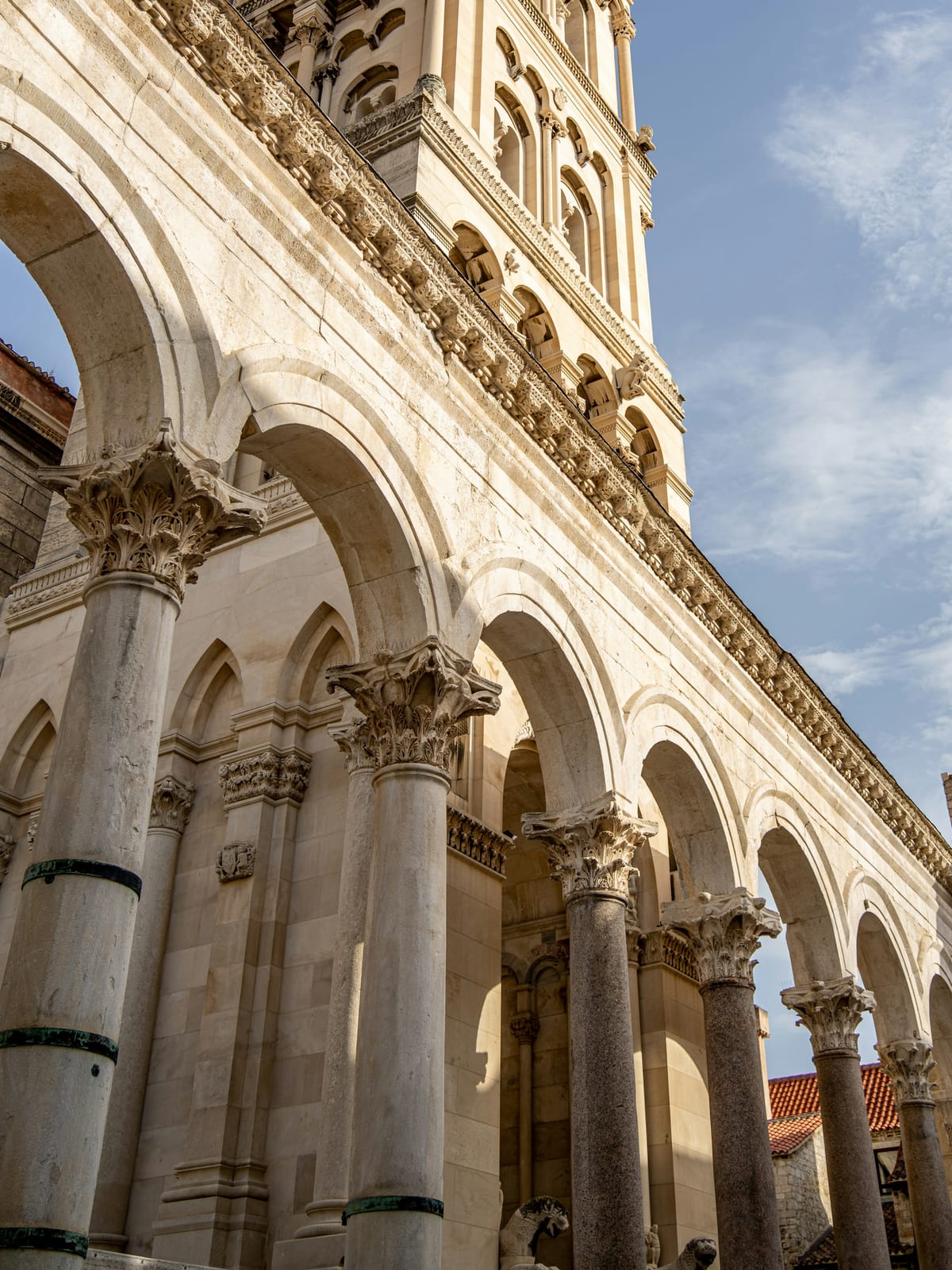
Split's Diocletian's Palace is the most extraordinary inhabited Roman monument in the world: an entire imperial residence whose footprint became the city centre, still enclosed within Roman walls and still housing thousands of residents whose apartments occupy spaces that were once imperial storerooms, guard quarters, and ceremonial halls. Your private guide — an archaeologist who has worked the Split site for fifteen years — takes you through the full palace: the basement halls beneath the peristyle, which are the best evidence of the original Roman layout; the peristyle courtyard at the centre of the complex, where daily café life now occupies the same space as imperial ceremonies; the cathedral of St Domnius, installed in Diocletian's mausoleum and therefore the best-preserved imperial mausoleum in existence. The afternoon is for Trogir — thirty minutes north of Split on a tiny island — whose Romanesque cathedral contains the Radovan Portal of 1240, considered the masterpiece of medieval Croatian sculpture. Return to Split for dinner.

  • Diocletian's Palace with archaeologist guide
  • Cathedral of St Domnius in the ancient mausoleum
  • Trogir UNESCO city — Radovan Portal 1240
  • Split Riva promenade evening
Meals: Breakfast 4–5★ hotel, Split
Day 6 — Hvar: By Private Boat
Day 6
6

Day 6

Hvar: By Private Boat

The lavender island and its Greek agricultural legacy.

The private boat from Split to Hvar takes an hour on calm Adriatic water. Croatia's sunniest island has a Venetian old town — the loggia, the clock tower, the Renaissance arsenal converted to Europe's first public theatre in 1612 — and an interior that belongs to a different world. The Stari Grad Plain is the oldest continuously cultivated agricultural landscape in Croatia, a Greek field system laid out in 384 BC and still in use today, with field boundaries and irrigation channels unchanged in 2,400 years. UNESCO recognised it as a World Heritage Site in 2008. Your afternoon is for the Pakleni Islands — a small archipelago of pine-forested islets off Hvar's harbour where the water is among the clearest on the coast. Swimming from the rocks of a private cove, the pine shade, the silence. Evening in Hvar Town.

  • Private boat Split to Hvar
  • Hvar Venetian square and the 1612 theatre
  • Stari Grad Plain — 2,400 years of continuous cultivation
  • Pakleni Islands private boat and swimming
Meals: Breakfast 4–5★ hotel, Hvar Town
Day 7 — Transfer to Dubrovnik
Day 7
7

Day 7

Transfer to Dubrovnik

The catamaran south, and the arrival that stops you.

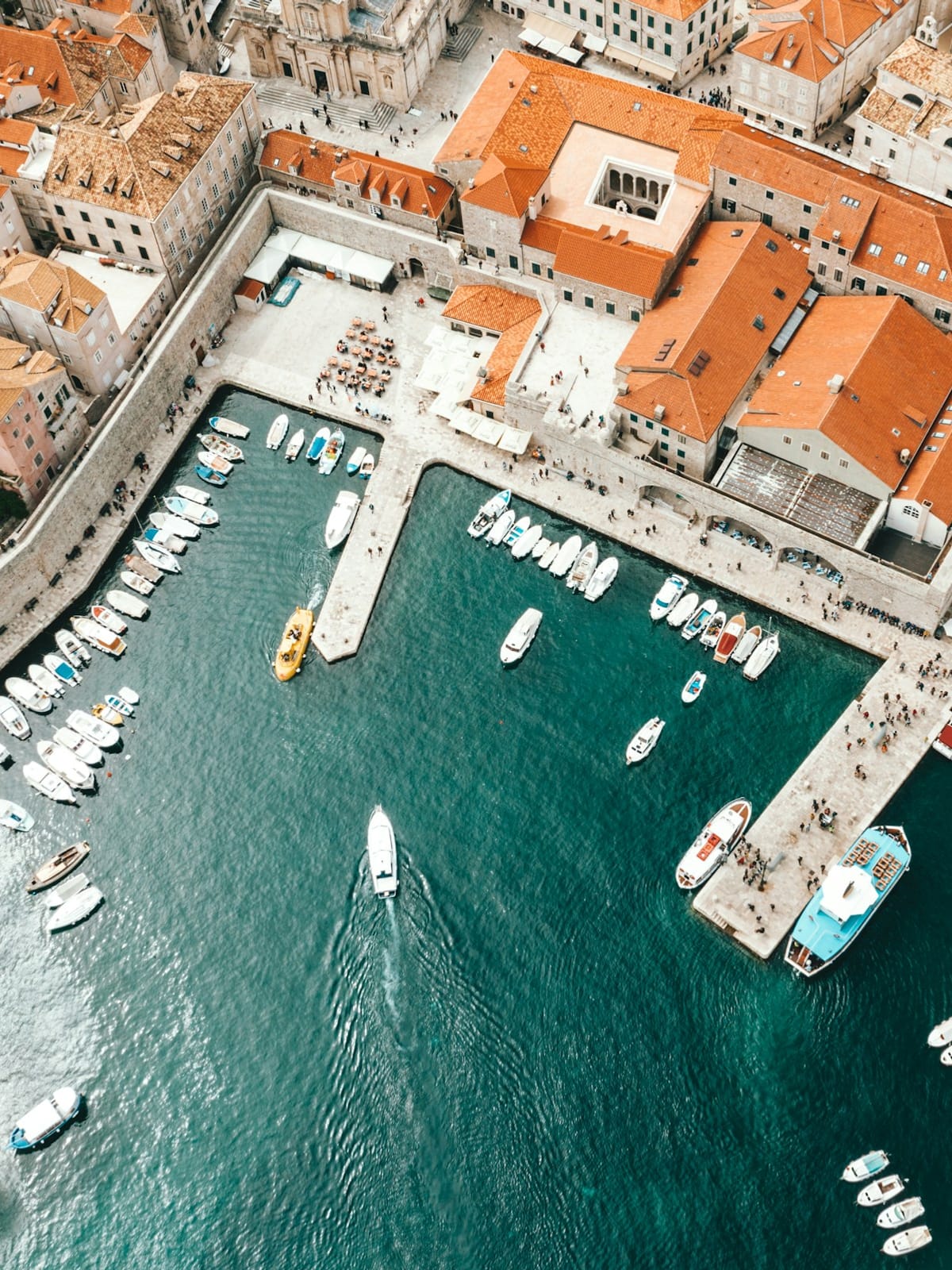
The fast catamaran from Hvar to Dubrovnik takes two hours along the coast, passing the Pelješac Peninsula — the narrow finger of land that produces Dingač, Croatia's finest red wine — and the Elafiti Islands, which lie off Dubrovnik's coast like a scattered handful of green islands in blue water. The arrival in Dubrovnik by sea is the best approach to the city: the walls rising straight from the water, the bell towers visible above the roofline, the harbour entrance framed by Fort Lovrijenac on the rocks. Your hotel is in the old town or on the Lapad peninsula. The afternoon at leisure: the Stradun, the Dominican monastery, the walk along the top of the harbour fortifications.

  • Catamaran Hvar to Dubrovnik — the coastal route
  • Pelješac Peninsula and the Elafiti Islands from the sea
  • Arrival by water — the walls rising from the Adriatic
  • First afternoon in Dubrovnik old town
Meals: Breakfast 5★ hotel, Dubrovnik
Day 8 — Dubrovnik: Walls and City
Day 8
8

Day 8

Dubrovnik: Walls and City

The medieval republic that survived by being smarter than its enemies.

Dubrovnik's city walls circuit is the single best experience of the old town: two kilometres of mediaeval rampart above the city, looking down into the terracotta roofs and the labyrinth of alleys, and out across the sea to Lokrum island and the open Adriatic. Your private guide meets you at the Pile Gate for the morning walk: the walls are best in the hour after opening, before the cruise ship passengers arrive. The Stradun — the main promenade of polished limestone that runs the length of the old city — the Rector's Palace with its Gothic courtyard, the Dominican monastery whose cloister garden contains a 15th-century pharmacy, and the Sponza Palace, where the Ragusan Republic kept its archives. Afternoon at leisure: the Buža bar above the sea, the cable car to Mount Srđ for the aerial view of the entire old city, or the ferry to Lokrum island for swimming.

  • City walls circuit with private guide — the best morning in Dubrovnik
  • Rector's Palace, Dominican monastery, Sponza Palace
  • Mount Srđ cable car — the aerial view of the old city
  • Optional: Lokrum island ferry and swimming
Meals: Breakfast 5★ hotel, Dubrovnik
Day 9 — Departure
Day 9
9

Day 9

Departure

One last morning in the walled city.

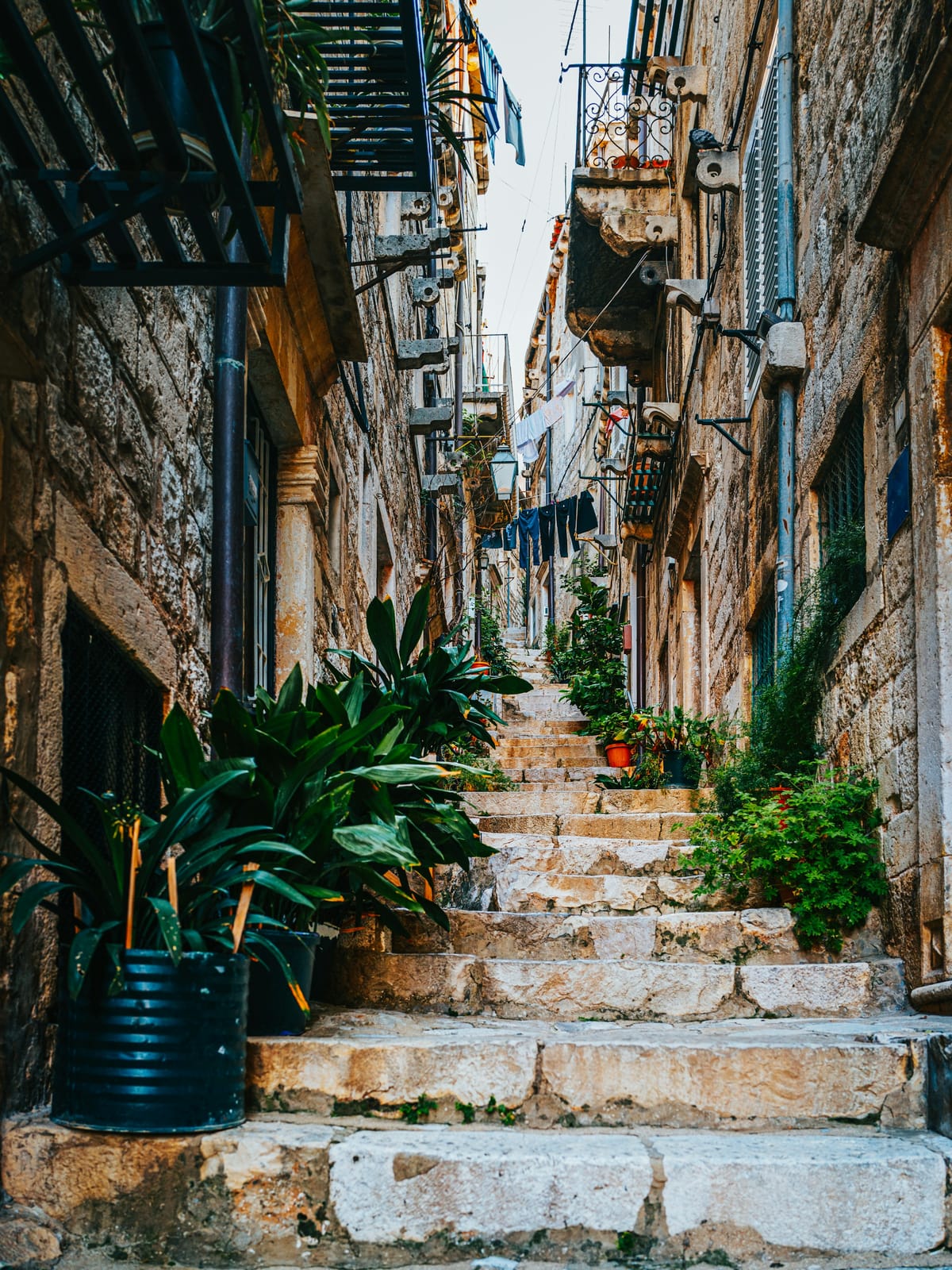
The old town in the first hour of the morning, when the limestone is still cool and the Stradun belongs to those who stayed overnight. Coffee at a bar in the Gundulić Square market. A last walk through the alleys behind the Rector's Palace, where the residential city of Dubrovnik lives apart from the tourist route. The Buža bar on the walls above the sea — wine and the sound of the Adriatic. Your private driver transfers you to Dubrovnik Airport at the agreed time.

  • Dubrovnik before the cruise ships arrive
  • Gundulić Square market and morning coffee
  • The Buža bar — wine above the sea
  • Private transfer to Dubrovnik Airport
Meals: Breakfast

Where You'll Stay

Hand-picked hotels, every night.

We choose properties for character, location, and the kind of service that makes you feel looked after — not just checked in. Every hotel can be swapped for an alternative if you prefer.

4–5★ hotel, Rovinj

Rovinj

2 nights

4–5★ hotel

Old town or harbour front

Rovinj has some of the most characterful small hotels on the Adriatic — harbour-front properties are particularly good

Hotel, Plitvice area

Plitvice area

1 night

Hotel

Near national park entrance

Staying near the park allows early morning entry before tour groups arrive

4–5★ hotel, Split

Split

2 nights

4–5★ hotel

Old town or Riva promenade

Inside or adjacent to Diocletian's Palace walls

4–5★ hotel, Hvar

Hvar

1 night

4–5★ hotel

Hvar Town harbour

Walking distance from the main square and the Pakleni Islands boat dock

5★ hotel, Dubrovnik

Dubrovnik

2 nights

5★ hotel

Old town or Lapad peninsula

Old town for atmosphere; Lapad for pool and sea access

Hotels shown are indicative of the standard we book. Upon request, we will provide a detailed itinerary with specific hotel options tailored to your preferences and budget.

What's in the Price

Included

  • 8 nights in 4–5★ hotels and boutique properties
  • Daily breakfast at each property
  • Welcome dinner in Rovinj
  • Private airport transfer from Pula
  • All private vehicle transfers between destinations
  • Private boat Split–Hvar and Pakleni Islands excursion
  • Fast catamaran Hvar–Dubrovnik
  • Plitvice Lakes private guide and national park entry
  • Split private archaeologist guide
  • Trogir UNESCO city visit with guide
  • Dubrovnik private guide and city walls circuit
  • Motovun truffle consultation and tasting
  • Pula Arena and Roman monuments guided visit
  • Stari Grad Plain visit on Hvar
  • All entrance fees for guided visits
  • 24/7 travel specialist support
  • Hamilton & Chase digital travel booklet

Not Included

  • International flights to Pula / from Dubrovnik
  • Travel insurance (required — we can arrange on request)
  • Meals not listed
  • Personal expenses
  • Gratuities for guides and drivers
  • City tax (collected by hotels)

Good to Know

  • This itinerary uses Pula Airport as the arrival point — connections from London, Vienna, Frankfurt, and Amsterdam are available April–October with seasonal carriers.
  • The Istrian truffle season for white truffles runs October–January; black truffles year-round. In summer, the truffle consultation focuses on black Istrian varieties and the fresh truffle products from the previous season.
  • Plitvice in July and August requires early morning entry to avoid the bulk of visitors — staying near the park the night before is essential.
  • The route can be reversed (Dubrovnik arrival, Pula departure) depending on flight connections — your specialist will advise.

Make It Yours

Optional add-ons & upgrades.

Every trip is different. These extras can be woven into your itinerary — just let your travel specialist know what catches your eye.

Istrian wine tasting

A private morning at a Teran and Malvazija producer in the Istrian interior — the peninsula's two signature wines, tasted in the cellar with the winemaker

From €85 pp

Korčula from Hvar

A day trip to the medieval walled town of Korčula by private boat from Hvar — the old town lanes, the Marco Polo debate, and lunch at a restaurant on the harbour walls

From €145 pp

Vis Island extension

Two nights on Vis between Hvar and Dubrovnik — the Blue Cave, Stiniva Cove, and the Vugava wine estate that never exports. Adds two days to the itinerary.

From €290 pp

Elafiti Islands from Dubrovnik

Three car-free islands by private boat — Koločep, Lopud, and Šipan — with swimming stops and lunch at a family konoba on Šipan

From €110 pp

"Beginning in Istria was the right decision. By the time we reached Dubrovnik we had been through three completely different Croatias. The truffle morning in Motovun, the empty Roman arena at Pula, Plitvice before nine o'clock — and then Split and Dubrovnik as the conclusion. Hamilton & Chase designed a journey, not just a list of places."

James & Sophie K.

Melbourne, Australia · Croatia and Istria, September 2024

Common Questions

Questions about this trip.

How different is Istria from Dalmatia?

Very different, in ways that are interesting rather than inconvenient. Istria is northern, more Central European in culture, Italian in many of its placenames and family histories (Rovinj was Rovigno until 1945), and its food tradition — truffles, prosciutto di Istria, the Malvazija wine — has no overlap with the Dalmatian coast. Beginning in Istria and ending in Dubrovnik makes both feel more distinct.

Is Pula worth a stop between Istria and Plitvice?

Emphatically yes — the Roman arena at Pula is undervisited compared to its size and condition. On a typical morning you can walk the entire circumference and stand in the centre of a 23,000-seat amphitheatre with almost no one else there. It takes a morning and is unlike anything else on the route.

Private Package Journey

Croatia & Istria

9 days / 8 nights

From €3,590

per person

Ready to go?

Share a few details and a specialist will reply within one business day.

More Croatia Tours

Prefer to Talk?

Available Mon–Fri 9am–6pm CET.
On-trip support is 24/7.

Plan My Trip