Hamilton & Chase Tours
Japan: Cherry Blossom Season — Private Package 10-day Japan tour: Timed to the annual sakura forecast — Yoshino’s 30,000 trees and Tokyo’s great blossom parks.

10-Day Private Package Journey

Japan: Cherry Blossom Season

Timed to the annual sakura forecast — Yoshino’s 30,000 trees and Tokyo’s great blossom parks.

Available as Private Semi-Private Self-Guided
From €4,690 per person 10 days / 9 nights
View Itinerary

Tour Overview

10 days across Japan.

Sakura — cherry blossom — lasts for approximately two weeks and the Japanese have been responding to its annual appearance with a specific form of collective attention (hanami, or flower-viewing) for over a thousand years. The blossom moves northward through Japan in a wave tracked by the Japan Meteorological Corporation's annual sakura forecast, arriving in southern Kyushu in late March, Tokyo and Kyoto in late March to early April, and the northern parks in late April. This ten-day private journey follows the blossom northward from Tokyo through the mountains to Kyoto, timed to the annual forecast with flexibility built in for the year's specific conditions. It is designed for travellers who want to see Japan at its most intensely Japanese — the weeks when the entire nation stops to sit beneath the flowering trees and acknowledge the specific beauty of impermanence.

Detailed Itinerary

Your journey, day by day.

Every day is designed with breathing room. Sleep in, take a detour, linger at lunch — the itinerary flexes around you, not the other way around.

Day 1 — Arrival in Tokyo
Day 1
1

Day 1

Arrival in Tokyo

The city in the first days of the season.

Your private driver meets you at Narita or Haneda. The timing of this itinerary is calibrated to the annual sakura forecast — cherry blossoms are already appearing in Tokyo on arrival or within twenty-four hours, and the city's response to the blossom is immediate and universal: the blue tarpaulins in Shinjuku Gyoen and Ueno Park staked out by advance hanami parties, the convenience store shelves of sakura-flavoured snacks (sakura mochi, sakura KitKat, sakura beer), and the specific pinkish quality of light in the city on the days when the trees are at full bloom. Welcome dinner at a restaurant whose terrace or window looks out at cherry trees, if the timing permits. Your specialist will confirm the specific blossom forecast for your arrival date and adjust the first-day schedule accordingly.

  • Private airport transfer — cherry blossom season begins
  • First encounter with hanami culture
  • Sakura forecast briefing from your specialist
  • Welcome dinner under the blossoms
4–5★ hotel, Tokyo
Day 2 — Tokyo: Ueno and Shinjuku Gyoen
Day 2
2

Day 2

Tokyo: Ueno and Shinjuku Gyoen

The two great blossom parks and the nation that stops for them.

Tokyo has more than 14,000 cherry trees and the two principal hanami parks — Ueno and Shinjuku Gyoen — hold the most celebrated concentrations. Ueno Park is the democratic version: 1,100 trees in an open park where every demographic of Tokyo converges for hanami parties under the trees, with food and beer vendors and the particular noise of collective Japanese pleasure. Shinjuku Gyoen is more refined: 65 hectares of formal French, English, and Japanese garden sections with 1,100 cherry trees of 75 different varieties, including the somei yoshino (the standard variety), the tall shidarezakura weeping cherries, and the late-blooming ichiyo. Alcohol is not permitted; the atmosphere is contemplative. Your private guide explains the cultural history of hanami — from the Heian courtiers who began the tradition of viewing cherry blossoms in the 8th century to the Edo-period custom of drunken blossom parties that the Tokyo parks still represent.

  • Ueno Park hanami — 1,100 trees, democratic and joyful
  • Shinjuku Gyoen — 75 cherry varieties in the formal garden
  • Hanami culture explained — 1,200 years of flower viewing
  • The variety of cherry blossoms — somei yoshino, weeping, double-flowered
Meals: Breakfast 4–5★ hotel, Tokyo
Day 3 — Tokyo: Chidorigafuchi and the River
Day 3
3

Day 3

Tokyo: Chidorigafuchi and the River

The moat that turns pink and the blossom by the water.

Chidorigafuchi — the northwest moat of the Imperial Palace — is the most beautiful blossom location in central Tokyo: cherry trees overhanging the water on both banks, the pale pink reflection in the moat, and the rental rowboats whose passengers are invisible beneath the flowering canopy. The combination of blossom and water is the quintessential sakura image, and Chidorigafuchi at full bloom is its fullest expression in Tokyo. Your private guide navigates the route and the timing — the moat is at its best in the morning before the crowds arrive. The afternoon: Yanaka, the old merchant quarter with its Buddhist cemetery where the cherry trees are planted between the graves, and the quiet neighbourhood streets where the blossom falls on wooden houses and stone lanterns. teamLab Borderless for the late afternoon — the digital art experience that has no fixed content and responds to the presence of visitors.

  • Chidorigafuchi moat — cherry trees reflected in the Imperial Palace moat
  • Rowboats beneath the blossom canopy
  • Yanaka cemetery — cherry trees between the Buddhist graves
  • teamLab Borderless digital art
Meals: Breakfast 4–5★ hotel, Tokyo
Day 4 — Nikko: Blossom in the Cedar Forest
Day 4
4

Day 4

Nikko: Blossom in the Cedar Forest

The mountain shrines in the first weeks of spring.

Nikko in early spring has a specific quality: the cherry blossoms appear later than in Tokyo (the altitude delays the season by one to two weeks), and their arrival against the backdrop of the 13,000 Japanese cedars planted in the 17th century produces a contrast of pale pink and deep forest green that the flat lowland parks cannot replicate. The Tosho-gu shrine complex — the most elaborately decorated religious site in Japan — in the mountain context. The Shinkyo Sacred Bridge, whose crimson lacquered arc above the river is the formal entrance to Nikko and one of the three most famous bridges in Japan, seen from the riverbank in the blossom. Your private guide explains the Tosho-gu and its decorations: the 508 carved animals, the sleeping cats, the three wise monkeys. Return to Tokyo in the afternoon or transfer toward Hakone.

  • Nikko cherry blossom against the cedar forest
  • Tosho-gu shrine and the Yomeimon gate
  • Shinkyo Sacred Bridge in the blossom
  • Transfer to the Hakone ryokan
Meals: Breakfast Traditional ryokan, Hakone
Day 5 — Hakone: Fuji and the Mountain Blossom
Day 5
5

Day 5

Hakone: Fuji and the Mountain Blossom

Mt Fuji with the sakura in the foreground — the image that defined Japan.

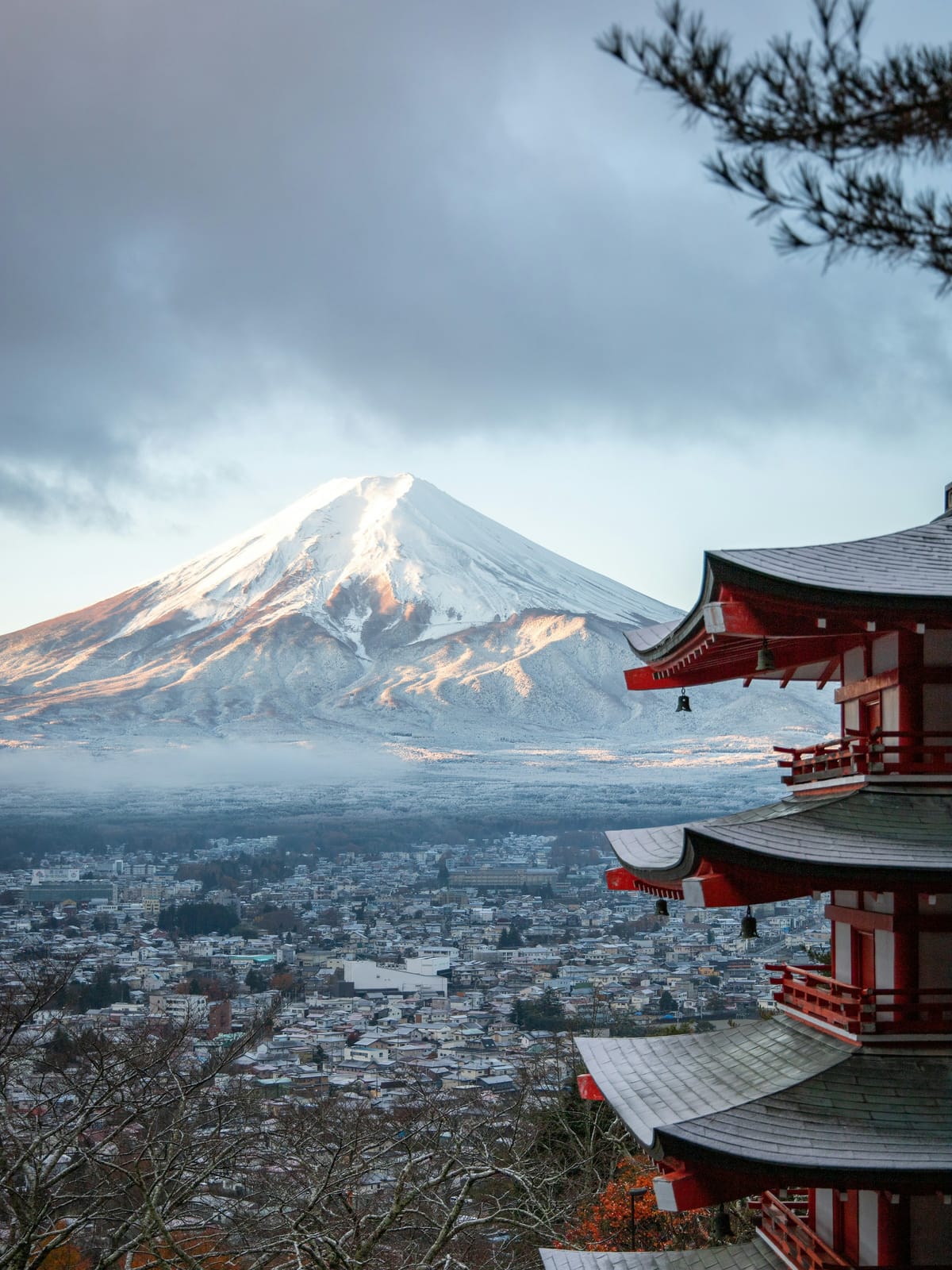
Hakone's cherry blossoms arrive slightly later than Tokyo's and often coincide with the full bloom of the Ashinoko lake region's flowering cherries. The most celebrated image in Japanese art — Hiroshige's and Hokusai's depictions of Mt Fuji with cherry blossoms — has its living counterpart at Ashinoko and in the Chureito Pagoda at Fujiyoshida: the five-storey pagoda on the hillside above the Fujisan Hongu Sengen shrine, with Fuji above and the cherry trees of the Fujiyoshida approach in the foreground. Your private vehicle makes the circuit in the morning. The Hakone Open-Air Museum for the afternoon. Your ryokan in Hakone for the night: the kaiseki dinner of seasonal spring ingredients (bamboo shoots, wild mountain vegetables, the early freshwater fish), the volcanic onsen.

  • Chureito Pagoda — Mt Fuji with cherry blossom foreground
  • Ashinoko Lake with sakura on the shore
  • Hakone Open-Air Museum
  • Kaiseki spring dinner with bamboo shoots and mountain vegetables
Meals: Breakfast Traditional ryokan, Hakone
Day 6 — Kyoto: Maruyama and the Night Blossoms
Day 6
6

Day 6

Kyoto: Maruyama and the Night Blossoms

The weeping cherry tree that has been illuminated at night for decades.

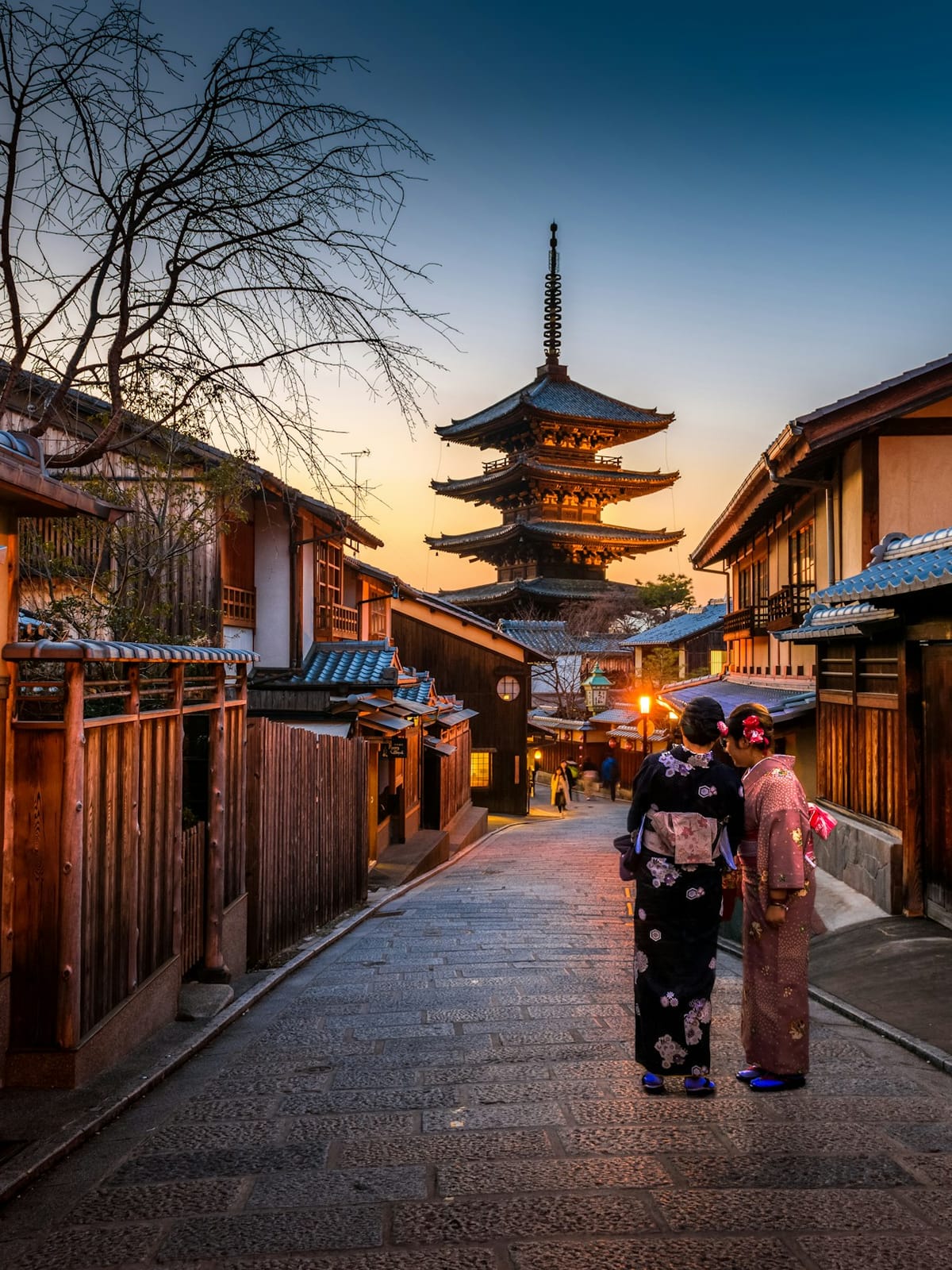
The Shinkansen from Odawara to Kyoto takes seventy-five minutes. Cherry blossom season in Kyoto is the most popular time of year — accommodation must be booked months in advance. Your private Kyoto guide meets you at the hotel and takes you through the afternoon with the knowledge of where the blossom is best on this specific day. Maruyama Park's central weeping cherry (gion shidare) is the most famous single sakura tree in Japan: a massive shidarezakura whose cascading branches are illuminated at night in pink-gold light from below, surrounded by picnickers beneath and the teahouses of Gion on either side. The Yasaka Shrine at the park's entrance. Philosopher's Path in the late afternoon: the canal-side walk under the tunnel of cherry branches. Gion in the evening when the lanterns come on and the blossom falls on the machiya rooftops.

  • Maruyama Park — the illuminated weeping cherry at night
  • Yasaka Shrine and the Gion sakura season
  • Philosopher's Path under the cherry tunnel
  • Gion evening — blossom falling on the machiya district
Meals: Breakfast 4–5★ hotel, Kyoto
Day 7 — Kyoto: The Temple Gardens in Bloom
Day 7
7

Day 7

Kyoto: The Temple Gardens in Bloom

The temple that releases admission because the sakura are free.

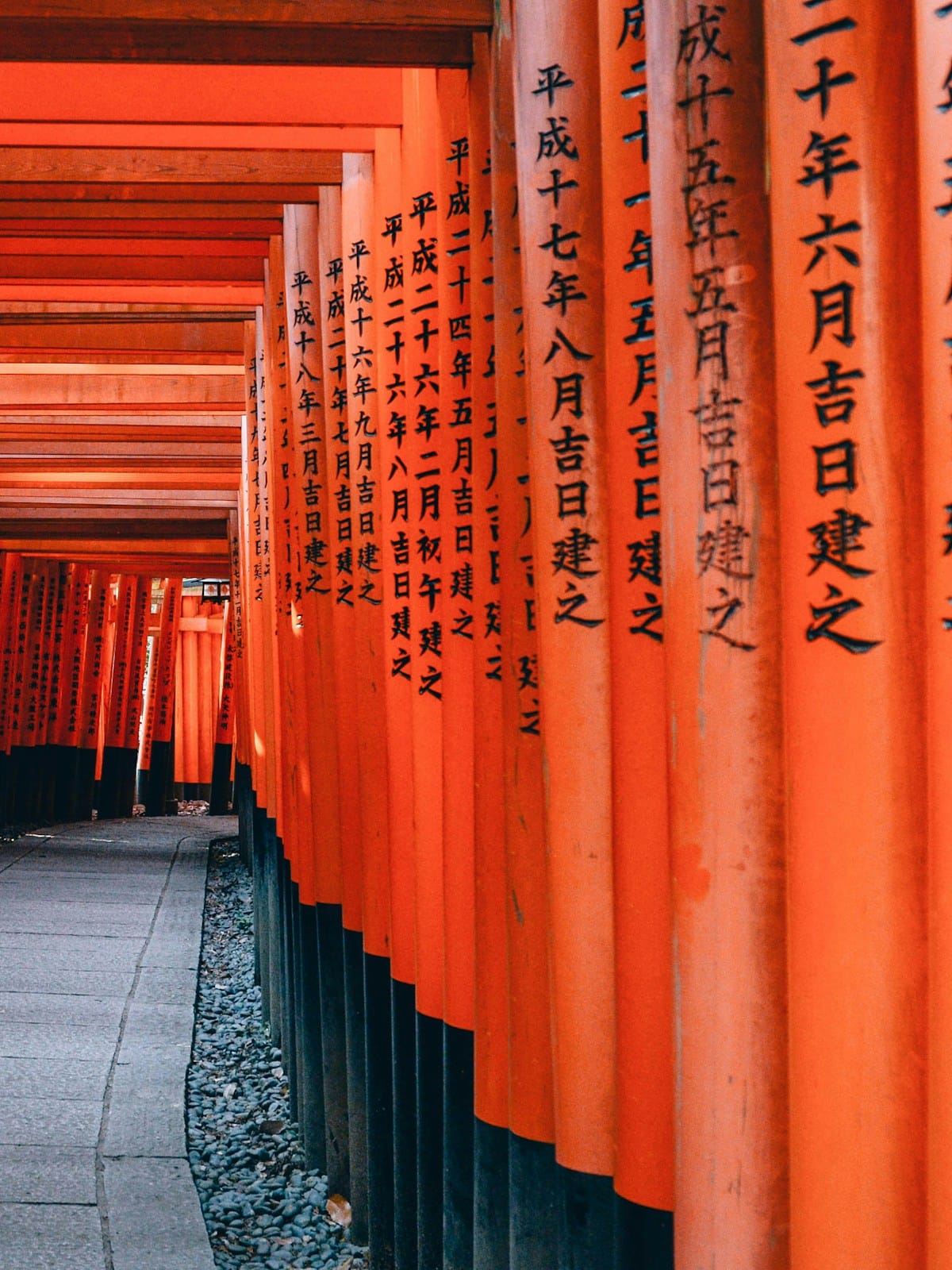
Kyoto's temple gardens have been designed with cherry trees as part of their seasonal composition for centuries. Kiyomizu-dera — the wooden stage temple built into the cliff face — with the cherry trees on the hillside of Higashiyama turning the mountain face pink. Daikaku-ji in the northwest of the city: the Osawa Pond's shoreline cherry trees, the full moon platform, and the atmospheric that makes this one of the most beautiful blossom locations in Kyoto. Fushimi Inari in the afternoon: the ten thousand torii gates on the mountain, with cherry trees between the vermillion pillars at the lower levels, and the combination of sakura and torii producing an image that exists nowhere else. The Nishiki Market for the spring food: the bamboo shoot pickles, the sakura mochi, and the first fresh tofu of spring.

  • Kiyomizu-dera — cherry trees on the Higashiyama hillside
  • Daikaku-ji and the Osawa Pond blossom
  • Fushimi Inari torii gates with sakura
  • Nishiki Market spring ingredients
Meals: Breakfast 4–5★ hotel, Kyoto
Day 8 — Yoshino: The Mountain of Ten Thousand Cherry Trees
Day 8
8

Day 8

Yoshino: The Mountain of Ten Thousand Cherry Trees

The most famous sakura landscape in Japan — 30,000 trees on one mountain.

Yoshino in Nara prefecture is a UNESCO World Heritage Site for its sacred mountain landscape — the Kinpusenji temple at the summit of Mt Yoshino, founded in the 7th century, is the head temple of the Shugendo mountain ascetic tradition. In spring, the mountain is covered by 30,000 cherry trees planted over more than a thousand years as offerings to the mountain deity. The trees are divided into four zones (shimo-, naka-, kami-, and oku-senbon — lower, middle, upper, and inner thousand-tree groups) that bloom in succession over two weeks as the altitude increases. The view from Yoshino town of the mountain covered in blossoms from the valley to the summit is the most extensively cited sakura landscape in Japanese literature, painting, and poetry, from the 8th century to the present. Your private vehicle from Kyoto takes ninety minutes. A walk through the lower and middle senbon with your guide. Lunch at a restaurant in Yoshino town. Return to Kyoto for the evening.

  • Yoshino — 30,000 cherry trees on one mountain
  • UNESCO sacred mountain landscape
  • Kinpusenji temple at the summit
  • The view that Japanese poets have been describing for 1,300 years
Meals: Breakfast 4–5★ hotel, Kyoto
Day 9 — Osaka: The Castle and the Final Blossom
Day 9
9

Day 9

Osaka: The Castle and the Final Blossom

The 16th-century moat lined with 600 cherry trees.

Osaka is thirty minutes from Kyoto by Shinkansen. Osaka Castle Park surrounds the 16th-century stone walls and moat with 600 cherry trees that are typically in full bloom when the Kyoto season is at its height — one of the finest castle-and-blossom combinations in Japan. Your private guide navigates the Osaka that is not the castle: the Dotonbori canal food street, the Kuromon Ichiba market at full midday operation, and the Shinsekai neighbourhood. The last bowl of takoyaki and the last walk beside the canal in the evening with the neon reflections in the water.

  • Osaka Castle Park — 600 cherry trees in the moat gardens
  • Final hanami — blossom and the 16th-century walls
  • Dotonbori food street
  • Kuromon Ichiba market
Meals: Breakfast 4–5★ hotel, Osaka
Day 10 — Departure
Day 10
10

Day 10

Departure

The last morning of sakura season.

The Japanese have a concept — mono no aware, the gentle sadness of passing things — that the cherry blossom season embodies most completely: the beauty is inseparable from the knowledge that it is nearly over, and the falling petals (hanafubuki, or blossom snowstorm) are the most beautiful moment of all. Your private driver transfers you to Kansai International Airport. The cherry trees along the airport approach road will be the last thing you see of Japan before departure.

  • Mono no aware — the beauty of impermanence
  • Hanafubuki — the blossom snowstorm as the petals fall
  • Private transfer to Kansai Airport
Meals: Breakfast

Where You'll Stay

Hand-picked hotels, every night.

We choose properties for character, location, and the kind of service that makes you feel looked after — not just checked in. Every hotel can be swapped for an alternative if you prefer.

4–5★ hotel, Tokyo

Tokyo

3 nights

4–5★ hotel

Shinjuku or Chiyoda

Location near the principal blossom parks (Shinjuku Gyoen, Chidorigafuchi) is recommended

Traditional ryokan, Hakone

Hakone

2 nights

Traditional ryokan

Hakone or Gora

Ryokan with private or shared onsen — kaiseki spring dinner included

4–5★ hotel, Kyoto

Kyoto

3 nights

4–5★ hotel

Higashiyama or Gion

Higashiyama location for proximity to Maruyama Park and the blossom temple circuit

4–5★ hotel, Osaka

Osaka

1 night

4–5★ hotel

City centre

Final night — Osaka Castle Park cherry blossoms and morning airport transfer

Hotels shown are indicative of the standard we book. Upon request, we will provide a detailed itinerary with specific hotel options tailored to your preferences and budget.

What's in the Price

Included

  • 9 nights in 4–5★ hotels and one traditional ryokan
  • Daily breakfast at your hotel or ryokan
  • Private airport transfer in Tokyo
  • All private vehicle transfers
  • Shinkansen tickets
  • Tokyo private guide (two days)
  • Kyoto private specialist guide (two days)
  • Yoshino mountain guide
  • Hakone Open-Air Museum entry
  • Tosho-gu shrine, Nikko
  • Tenryu-ji garden entry
  • Osaka Castle entry
  • teamLab Borderless admission (pre-booked)
  • All entrance fees for guided visits
  • 24/7 travel specialist support
  • Hamilton & Chase digital travel booklet with sakura forecast briefing and bloom tracker

Not Included

  • International flights to/from Japan
  • Travel insurance (required — we can arrange on request)
  • Meals not listed
  • Personal expenses
  • Gratuities for guides and drivers
  • Accommodation tax (collected by hotels)

Good to Know

  • Cherry blossom dates vary by approximately two weeks from year to year. We book this itinerary with flexible check-in dates and monitor the Japan Meteorological Corporation forecast from February onwards. Your specialist will confirm the optimal arrival date for your year by January.
  • Kyoto accommodation during cherry blossom season must be booked six to twelve months in advance. The best properties sell out immediately upon availability release. Early booking is essential.
  • Rain during blossom season is normal and not a disaster — the petals become translucent when wet, the crowds reduce, and the light quality changes in ways that photography books describe as superior. Your guide will adjust the schedule for rain.
  • The full bloom typically lasts seven to ten days at each location. The hanafubuki (petal snowstorm) phase, when the petals are falling, is considered the most beautiful and lasts three to five additional days.

Make It Yours

Optional add-ons & upgrades.

Every trip is different. These extras can be woven into your itinerary — just let your travel specialist know what catches your eye.

Hirosaki Castle (Aomori) extension

The castle with the most famous sakura moat in Japan — 2,600 trees whose fallen petals turn the moat pink. The Hirosaki blossom arrives two to three weeks after Tokyo. For guests who want to follow the season north, a two-day extension to Aomori can be added.

Price on Request

Nara day trip

Nara's 1,200 sacred deer under the cherry trees — Todai-ji Great Buddha Hall and the Kasuga Taisha shrine forest at blossom time

From €95 pp

Hanami picnic arrangement

A private hanami picnic arranged under the cherry trees at a reserved location — the traditional bento box, sake, and spring sweets, with a guide who knows the best trees and the best time

From €85 pp

Kiyomizu-dera after dark

Kiyomizu-dera holds special night illuminations during cherry blossom season — the temple lit from below, the sakura illuminated against the black mountain, and the city of Kyoto spread below. The most dramatic night experience of the season.

From €55 pp

"We had planned this trip around the sakura forecast and Hamilton & Chase timed everything around it — arriving in Tokyo when the Shinjuku Gyoen was at full bloom, reaching Yoshino at the peak of the lower senbon. Standing on the mountain at Yoshino and looking down at 30,000 cherry trees covering the entire valley — that is not something that has an equivalent anywhere else on earth. The itinerary was perfectly designed for the season."

Jennifer & Paul O.

Dublin, Ireland · Japan: Cherry Blossom Season, April 2025

Common Questions

Questions about this trip.

How far in advance should we book?

As early as possible — ideally nine to twelve months before your intended dates. Cherry blossom season is Japan's most popular travel period and the best accommodation sells out the year before. We monitor the forecast from February and confirm your exact travel dates as early as possible in that year.

What if the blossom is early or late?

We build flexibility into the itinerary for exactly this reason. The Tokyo section can be shortened or extended by one day, the Hakone and Nikko timing can be adjusted, and the Kyoto arrival can be shifted by a day or two. In a bad year (unusually late or early season), we have experienced guides on the ground who know which locations are ahead of the main forecast and direct us accordingly.

Private Package Journey

Japan: Cherry Blossom Season

10 days / 9 nights

From €4,690

per person

Ready to go?

Share a few details and a specialist will reply within one business day.

More Japan Tours

Prefer to Talk?

Available Mon–Fri 9am–6pm CET.
On-trip support is 24/7.

Plan My Trip