Hamilton & Chase Tours
Ryokan & Onsen Japan — Private Package 9-day Japan tour: Japan’s traditional inn culture — volcanic Hakone, ancient Arima Onsen, and Kyoto’s machiya.

9-Day Private Package Journey

Ryokan & Onsen Japan

Japan’s traditional inn culture — volcanic Hakone, ancient Arima Onsen, and Kyoto’s machiya.

Available as Private Semi-Private Self-Guided
From €4,190 per person 9 days / 8 nights
View Itinerary

Tour Overview

9 days across Japan.

The ryokan is Japan's most distinctive hospitality tradition: a traditional inn with tatami mat rooms, futon bedding laid by the staff, a multi-course kaiseki dinner served in the room, and access to onsen hot spring baths fed by volcanic or mineral water. The best ryokan are not hotels that have added tatami rooms — they are complete expressions of a 400-year tradition in which every element of the guest's experience, from the ceramics used for the tea ceremony on arrival to the arrangement of the flower in the alcove, reflects the season and the specific landscape of the inn. This nine-day private journey is designed around the ryokan experience at its finest: a volcanic onsen inn in Hakone, a mountain hot spring in Arima (the oldest onsen resort in Japan), and Kyoto's traditional machiya townhouse culture, with Tokyo's contrasting modernity as the opening context.

Detailed Itinerary

Your journey, day by day.

Every day is designed with breathing room. Sleep in, take a detour, linger at lunch — the itinerary flexes around you, not the other way around.

Day 1 — Arrival in Tokyo
Day 1
1

Day 1

Arrival in Tokyo

The world's largest city — first impressions.

Your private driver meets you at Narita or Haneda and delivers you to your hotel in central Tokyo. The afternoon at leisure: the first walk in the neighbourhood, the first encounter with Japanese food culture in its most everyday form — the convenience store that sells better prepared food than most European cafés, the ramen counter where you order by vending machine and eat in silence and focused pleasure. Welcome dinner at a restaurant your specialist has selected — the omakase counter where the chef decides each course, the kaiseki restaurant where the seasonal menu is the point, or the neighbourhood izakaya where small plates and sake are the evening's structure.

  • Private airport transfer
  • First Tokyo neighbourhood walk
  • Japanese convenience store food culture
  • Welcome dinner — Tokyo omakase or izakaya
4–5★ hotel, Tokyo
Day 2 — Tokyo: The Ancient and the Present
Day 2
2

Day 2

Tokyo: The Ancient and the Present

Seven centuries of temple incense and one century of neon.

Tokyo's apparent contradictions are its character. Your private guide begins in Asakusa: the Senso-ji temple complex founded in 645 AD, where the incense cloud at the main hall has been used for purification since the Heian period and the stalls of the Nakamise shopping street have been selling Buddhist amulets and traditional sweets for three centuries. The Sumida River walk and the view of Tokyo Skytree. North to Yanaka — the old merchant quarter that survived the 1923 earthquake and the 1945 firebombing — for the neighbourhood of wooden shophouses and small temples that represents what Tokyo looked like before 1945. Afternoon: the Nezu Shrine and its tunnel of torii gates (smaller, quieter, and more beautiful than Fushimi Inari). The Meiji Shrine in the zelkova forest at the centre of the city. The evening in the Omotesando district: Japan's most architecturally interesting shopping street, designed by Tadao Ando, Kengo Kuma, and Herzog & de Meuron.

  • Senso-ji and the Nakamise shopping street
  • Yanaka neighbourhood — old Tokyo
  • Nezu Shrine torii tunnel — quiet alternative to Fushimi
  • Omotesando architecture — Ando, Kuma, Herzog & de Meuron
Meals: Breakfast 4–5★ hotel, Tokyo
Day 3 — Hakone: The Volcanic Onsen
Day 3
3

Day 3

Hakone: The Volcanic Onsen

The mountain lake, the Fuji reflection, and the best first ryokan night.

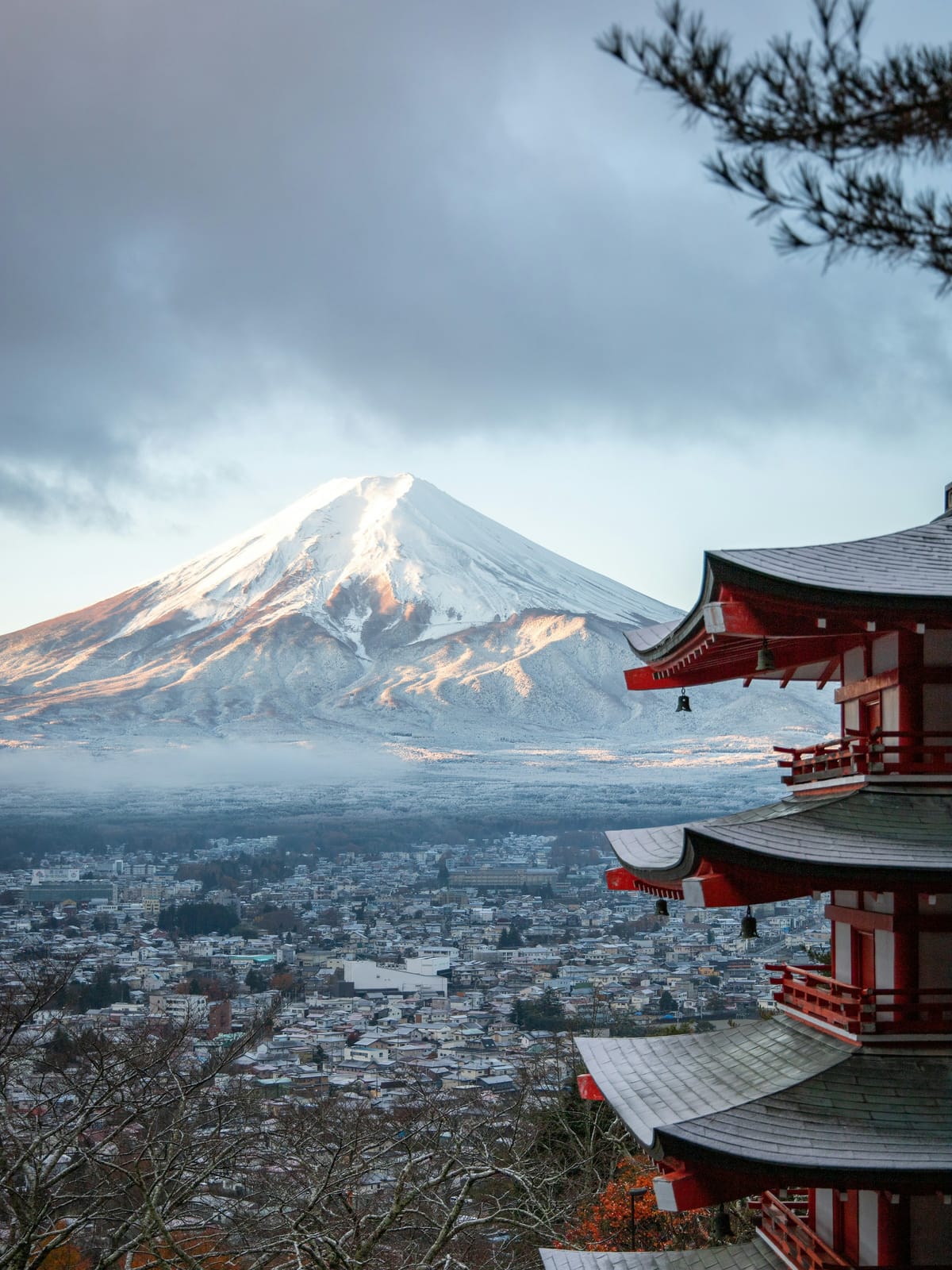
The drive from Tokyo to Hakone takes ninety minutes into the volcanic region southwest of the capital. Ashinoko Lake on a clear morning is the first encounter with the Japan that exists away from the city: the Fuji reflection in still water, the torii gate at the lake's edge, the pine-forested shores. The Hakone Open-Air Museum — one of the finest outdoor sculpture parks in Asia — in the morning. By early afternoon, your ryokan: the okami (inn hostess) greets you at the entrance, guides you to your room, and explains the routines of the house. The tatami mat room, the wooden bath with the volcanic water already drawn, the yukata robe, and the kaiseki dinner of ten or twelve courses served in the room as the mountain grows dark outside. The onsen baths — fed by the volcanic water of the Hakone caldera — are available morning and evening. The quality of silence at a Hakone ryokan after dinner is something Tokyo does not prepare you for.

  • Ashinoko Lake — Mt Fuji in the reflection
  • Hakone Open-Air Museum
  • Traditional ryokan arrival — the okami and the routines
  • Kaiseki dinner in the tatami room and volcanic onsen
Meals: Breakfast Premium ryokan, Hakone (with private onsen)
Day 4 — Kyoto: The Imperial Capital
Day 4
4

Day 4

Kyoto: The Imperial Capital

A thousand years of cultural accumulation, still intact.

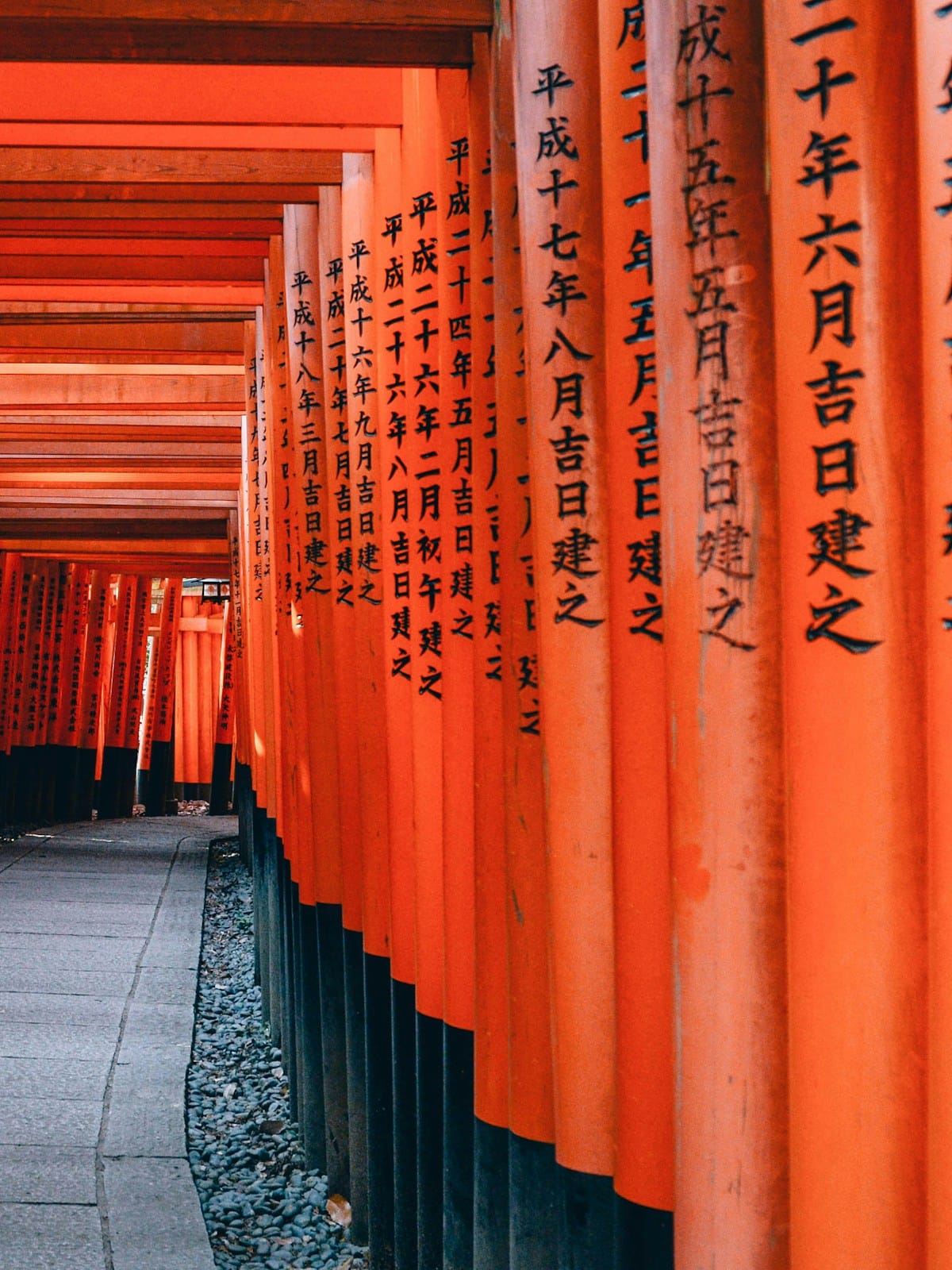
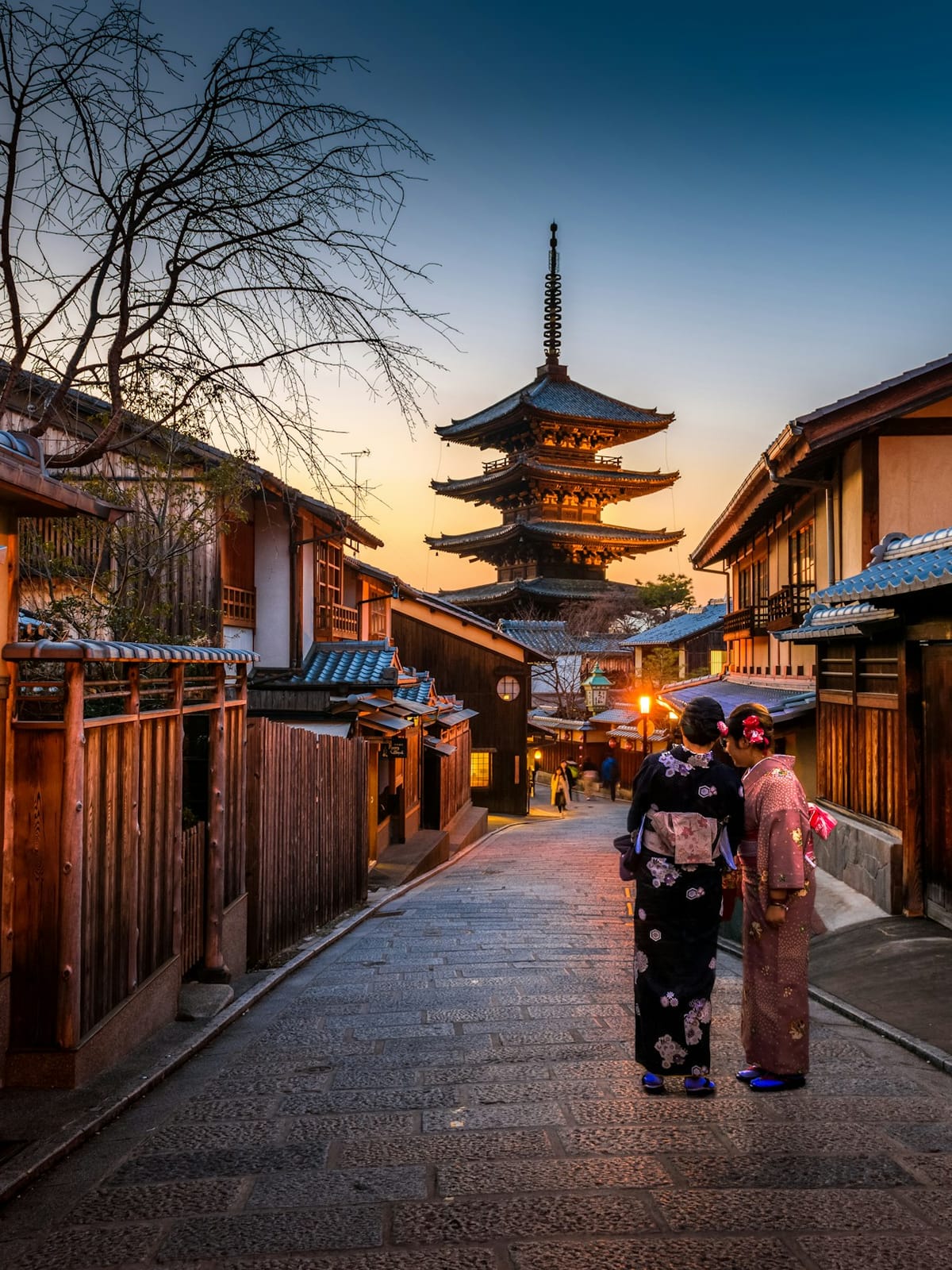
The Shinkansen from Odawara to Kyoto takes seventy-five minutes. Kyoto was the imperial capital of Japan for a thousand years and was deliberately preserved from the 1945 firebombing — 1,600 temples, 400 shrines, and the intact geisha districts survive as a consequence. Your private Kyoto guide meets you at the hotel. The afternoon: Fushimi Inari Taisha and its ten thousand torii gates ascending the mountain — the lower circuit takes thirty minutes; the full mountain ascent takes two hours and ends in a forest path where only the serious walkers arrive. Gion in the evening: the preserved machiya townhouse district where the teahouses operate and geiko still walk to their engagements in the low lantern light. Kyoto at night, before the crowds return in the morning, belongs to those who stayed.

  • Shinkansen to Kyoto — the bullet train journey
  • Fushimi Inari and the torii gate forest
  • Gion at dusk — geiko in the machiya district
  • Kyoto private specialist guide
Meals: Breakfast 4–5★ hotel or traditional machiya, Kyoto
Day 5 — Kyoto: The Zen Garden and the River Valley
Day 5
5

Day 5

Kyoto: The Zen Garden and the River Valley

The perfect garden, the perfect bamboo, and the silent temple.

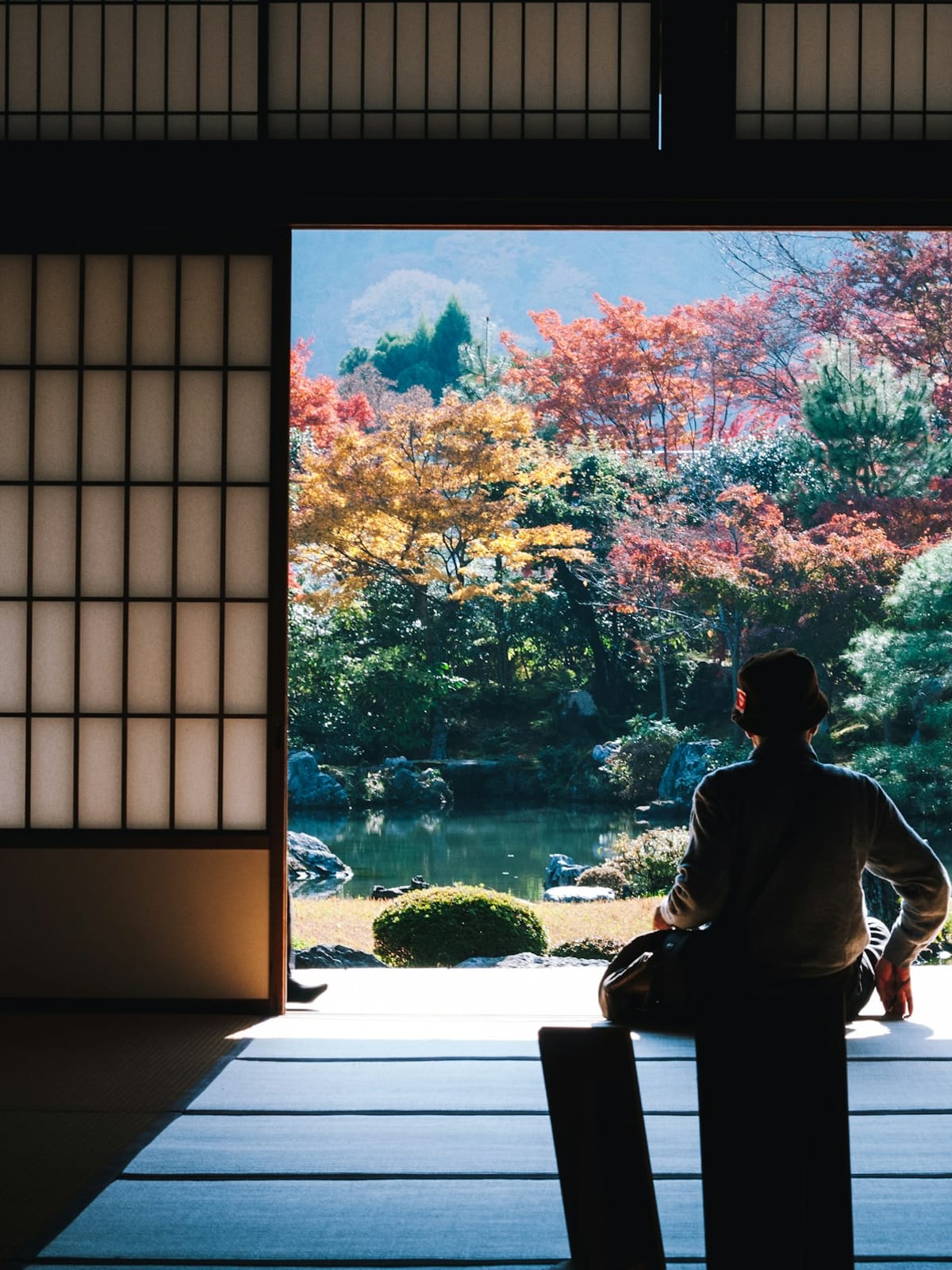
Arashiyama before nine in the morning: the bamboo grove quiet enough to hear the stalks creak in the wind, the Tenryu-ji temple garden as the gardeners are at work on the raked gravel. Tenryu-ji's Zen garden was designed in 1339 by Muso Soseki and is considered the finest in Japan — the arrangement of rocks, raked gravel, and the borrowed landscape of the mountain behind is the clearest expression of the Zen aesthetic. The Oi River at the bamboo grove, where traditional cormorant fishing (ukai) takes place on summer evenings with lantern-lit boats. Ninnaji temple in the northwest of the city, whose five-storey pagoda and cherry orchard are less visited than the Arashiyama temples. The Philosopher's Path along the canal toward Ginkaku-ji. Afternoon at leisure: the Nishiki Market for the pickles and matcha products, or a tea ceremony at a traditional tearoom in the Higashiyama district.

  • Arashiyama bamboo grove before nine
  • Tenryu-ji Zen garden — the finest in Japan
  • Ninnaji temple and the off-season quiet
  • Optional: tea ceremony in Higashiyama
Meals: Breakfast 4–5★ hotel or traditional machiya, Kyoto
Day 6 — Nara and the Sacred Forest
Day 6
6

Day 6

Nara and the Sacred Forest

Japan's first capital and the 1,300-year relationship between humans and deer.

Nara is forty minutes from Kyoto and houses Japan's oldest and most significant Buddhist monuments in a park where 1,200 deer roam freely, considered divine messengers of the Kasuga Taisha shrine since the 8th century. Todai-ji — the Great Buddha Hall — is the largest wooden structure in the world and houses the bronze Vairocana Buddha, 15 metres tall, cast in 743 AD. The Kasuga Taisha shrine approaches through 3,000 stone and bronze lanterns in the cedar forest. The Isui-en garden of the Meiji period, whose composition frames the Great Buddha Hall in the background like a painting. The deer in Nara Park approach people for the shika senbei crackers, bow when offered one, and eat from your hand with a casual divinity that seven centuries of sacred status has given them. Return to Kyoto for the evening.

  • Nara's sacred deer — 1,200 in the park
  • Todai-ji Great Buddha Hall — largest wooden structure in the world
  • Kasuga Taisha — 3,000 lanterns in the forest
  • Isui-en garden
Meals: Breakfast 4–5★ hotel or traditional machiya, Kyoto
Day 7 — Arima Onsen: Japan's Oldest Hot Spring Town
Day 7
7

Day 7

Arima Onsen: Japan's Oldest Hot Spring Town

1,350 years of bathing in the mountains above Kobe.

Arima Onsen is in the mountains north of Kobe, an hour from Kyoto, and has been a hot spring resort since at least 631 AD — the oldest onsen town in Japan. Toyotomi Hideyoshi, the samurai who unified Japan in the 16th century, bathed here repeatedly and described it as his favourite retreat. The town has two distinct types of spring water: Kin no yu (golden water), iron-rich and rust-coloured, which stains the skin briefly and is said to cure specific ailments; and Gin no yu (silver water), a clear radium-bearing spring with a different mineral profile and a lighter quality. Your ryokan in Arima is built over the mountain springs, with private or shared baths of both types. The town itself — a narrow valley with the bath-house street, the small shrine, the vendors selling Arima-specific sweets — is small enough to walk entirely in thirty minutes. The evening kaiseki dinner and the mountain silence.

  • Arima Onsen — the oldest hot spring town in Japan
  • Kin no yu and Gin no yu — gold and silver spring waters
  • Toyotomi Hideyoshi's favourite retreat
  • Kaiseki dinner and mountain onsen
Meals: Breakfast Premium ryokan, Arima Onsen
Day 8 — Osaka: Kuidaore
Day 8
8

Day 8

Osaka: Kuidaore

The city that built its identity around eating.

Arima Onsen is thirty minutes from Osaka. Your private guide for the day: Osaka Castle — the 16th-century stone walls and moat that Toyotomi Hideyoshi built as the political centre of a unified Japan — and the Osaka that is not the castle. The Dotonbori canal, where the food stalls have been operating for two hundred years, the running man neon sign for Glico candy visible from every bridge, and the takoyaki octopus balls sold at the counter you eat standing up. The Kuromon Ichiba market — the city's kitchen for 200 years — for the late morning visit when the stalls are at full operation: fresh tuna being sliced, Kobe beef being weighed, and the Osaka vendors' particular style of direct engagement with customers that is different from Tokyo's quiet formality. The evening at Dotonbori at its neon peak.

  • Osaka Castle — Hideyoshi's political headquarters
  • Dotonbori canal food street
  • Kuromon Ichiba market at full operation
  • Osaka at night — the neon city
Meals: Breakfast 4–5★ hotel, Osaka
Day 9 — Departure from Osaka
Day 9
9

Day 9

Departure from Osaka

One last Japanese morning.

The final morning in Japan: the Japanese breakfast at a neighbourhood coffee shop (the morning set — toast, egg, salad, coffee — is a specific cultural institution), a last walk through the Kuromon market before the stalls open, or a final look at Osaka Castle in the morning light. Your private driver transfers you to Kansai International Airport at the agreed time.

  • Japanese breakfast set — the morning ritual
  • Final Osaka walk
  • Private transfer to Kansai Airport
Meals: Breakfast

Where You'll Stay

Hand-picked hotels, every night.

We choose properties for character, location, and the kind of service that makes you feel looked after — not just checked in. Every hotel can be swapped for an alternative if you prefer.

4–5★ hotel, Tokyo

Tokyo

2 nights

4–5★ hotel

Shinjuku, Shibuya, or Asakusa

Two nights in Tokyo before the ryokan journey begins

Premium ryokan with private onsen, Hakone

Hakone

1 night

Premium ryokan with private onsen

Hakone or Gora

First ryokan night — private onsen bath and kaiseki dinner. Hakone's volcanic water is exceptional.

4–5★ hotel or traditional machiya, Kyoto

Kyoto

3 nights

4–5★ hotel or traditional machiya

Higashiyama or city centre

Option to stay in a restored machiya townhouse for the most authentic Kyoto experience

Premium ryokan, Arima Onsen

Arima Onsen

1 night

Premium ryokan

Arima town centre

The finest ryokan in Arima are built over the original spring sources — bath access to both Kin no yu and Gin no yu

4–5★ hotel, Osaka

Osaka

1 night

4–5★ hotel

Shinsaibashi or Namba

Final night — central location for Dotonbori and morning airport transfer

Hotels shown are indicative of the standard we book. Upon request, we will provide a detailed itinerary with specific hotel options tailored to your preferences and budget.

What's in the Price

Included

  • 8 nights in premium ryokan and 4–5★ hotels
  • Daily breakfast at your hotel or ryokan
  • Private airport transfer in Tokyo
  • All private vehicle transfers
  • Shinkansen tickets
  • Tokyo private guide
  • Kyoto private specialist guide
  • Hakone Open-Air Museum entry
  • Tenryu-ji garden entry
  • Nijo Castle entry
  • Todai-ji and Nara Park
  • Osaka Castle entry
  • All entrance fees for guided visits
  • 24/7 travel specialist support
  • Hamilton & Chase digital travel booklet with ryokan etiquette guide and onsen protocol

Not Included

  • International flights to/from Japan
  • Travel insurance (required — we can arrange on request)
  • Meals not listed
  • Personal expenses
  • Gratuities for guides and drivers
  • Accommodation tax (collected by hotels)

Good to Know

  • Ryokan etiquette — removing shoes at the entrance, wearing yukata, onsen protocol — is explained by your guide before arrival and in the Hamilton & Chase travel booklet. It is not complicated, but understanding it in advance makes the experience significantly better.
  • The best ryokan properties in Hakone and Arima require booking several months in advance, particularly for autumn colour season (October–November) and cherry blossom (late March–early April).
  • Tatami rooms with futon bedding are the standard at traditional ryokan — if physical difficulty getting up from floor level is a concern, Western-style beds can be requested at some properties. Your specialist will confirm availability.
  • Some onsen baths require guests to have no tattoos — a historic policy that some properties still maintain. Your specialist will select properties that either do not enforce this policy or have private bath options.

Make It Yours

Optional add-ons & upgrades.

Every trip is different. These extras can be woven into your itinerary — just let your travel specialist know what catches your eye.

Kinosaki Onsen

The most atmospheric onsen town in Japan — seven public bathhouses in a single ryokan town, each different in character, visited on foot in yukata as the evening tradition. Two hours north of Kyoto, worth an overnight addition for serious onsen travellers.

From €195 pp

Private tea ceremony, Kyoto

A private tea ceremony in a traditional tearoom in Higashiyama — the full ritual of chakai (informal) or chaji (formal), with a certified tea master and seasonal wagashi sweets. Not the tourist version.

From €95 pp

Sake workshop, Fushimi

Kyoto's Fushimi district is Japan's second-greatest sake region — a private morning at a producing brewery with tasting of fresh, seasonal, and aged sake from the same spring water used by the historic Fushimi brewers.

From €75 pp

Kodo incense ceremony

Kodo — the Japanese art of listening to incense — is as refined a tradition as the tea ceremony and far less known outside Japan. A private session with a practitioner in Kyoto.

From €85 pp

"The Hakone ryokan was the night that made the trip. We had stayed in expensive hotels in many countries. Nothing had prepared us for the quality of attention at a Japanese ryokan — the room prepared to the season, the kaiseki dinner that told you something about autumn in a mountain valley, the silence after. And then Arima Onsen at the end: the gold water, the mountain town, the same bath that Toyotomi Hideyoshi bathed in. Hamilton & Chase chose the right properties."

Thomas & Marie P.

Geneva, Switzerland · Ryokan & Onsen Japan, November 2024

Common Questions

Questions about this trip.

What is the difference between a good ryokan and a standard one?

The difference is total. A good ryokan — the type we select — is a property where the kaiseki dinner is cooked by a chef who has trained for twenty years and adjusts the menu to the season and the specific ingredients available that week; where the okami has managed the house for decades and attends to the room preparation personally; and where the onsen is fed by a natural source specific to that location. A standard ryokan has tatami rooms and a public hot spring bath. The difference in experience is absolute.

What is the onsen etiquette?

Wash thoroughly at the individual shower stations before entering the communal bath. No swimwear — the onsen is bathed in nude. Tie back long hair. Do not immerse a towel in the water. Most other things follow from these. Your travel booklet covers it in detail, and your guide will explain it before the first ryokan night.

Private Package Journey

Ryokan & Onsen Japan

9 days / 8 nights

From €4,190

per person

Ready to go?

Share a few details and a specialist will reply within one business day.

More Japan Tours

Prefer to Talk?

Available Mon–Fri 9am–6pm CET.
On-trip support is 24/7.

Plan My Trip